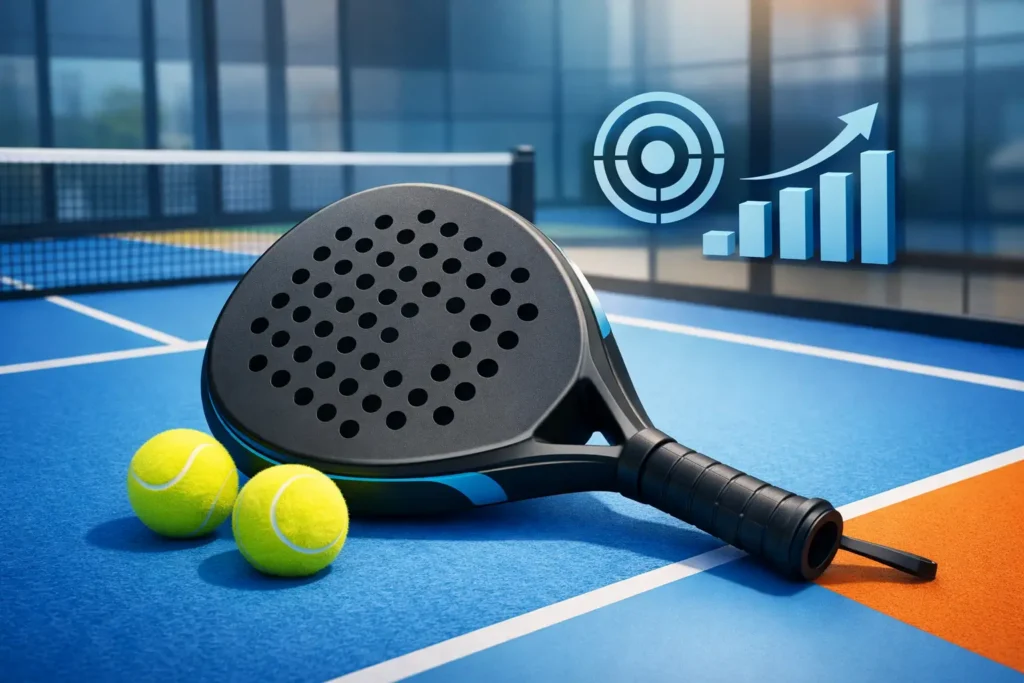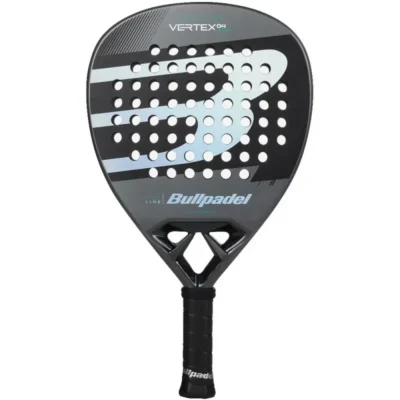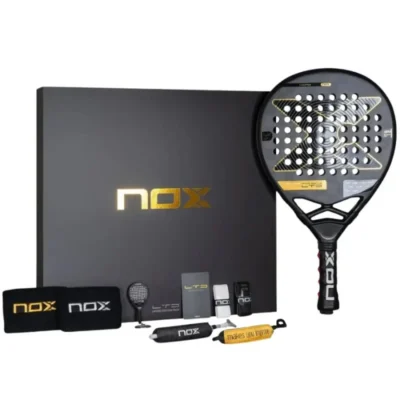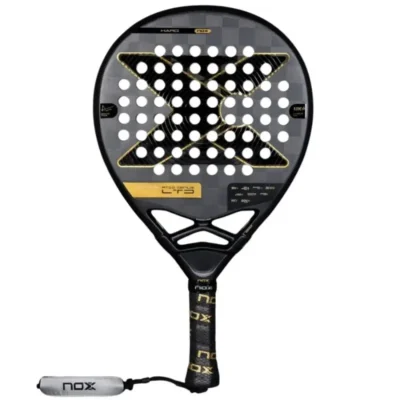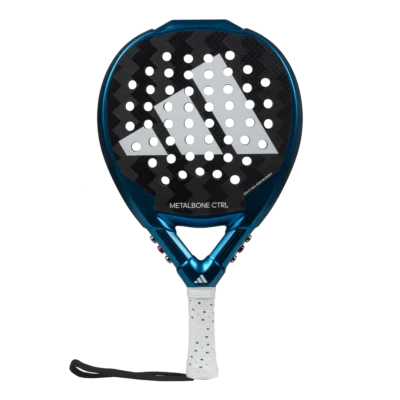
That missed volley at the net and the smash that flew long often come from the same place – using a racket that does not suit your game. If you are weighing up a control vs power padel racket, the right choice is less about what looks impressive and more about what helps you win more points with your current level and style.
A lot of players assume power is always better. Others play it safe and buy control because it sounds easier. In reality, both have clear strengths, and both can hold you back if they do not match the way you play. The best racket is the one that gives you confidence on your most common shots, not the one with the boldest marketing.
Control vs power padel racket: the real difference
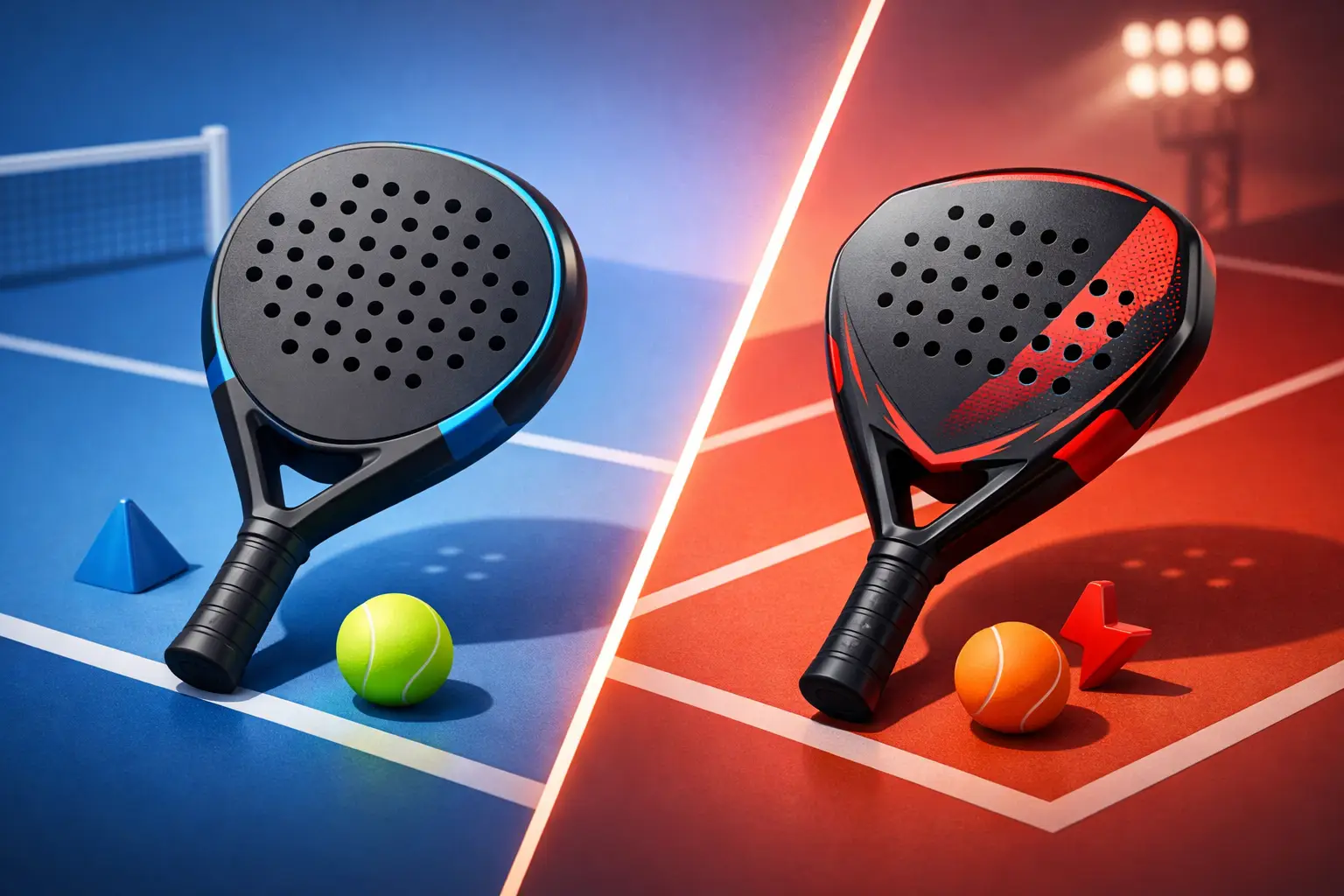
A control racket is built to help you place the ball accurately, defend comfortably and keep more shots in play. A power racket is designed to give you more punch on aggressive shots such as smashes, volleys and bandejas when you are attacking.
That difference usually comes from three things – shape, balance and feel.
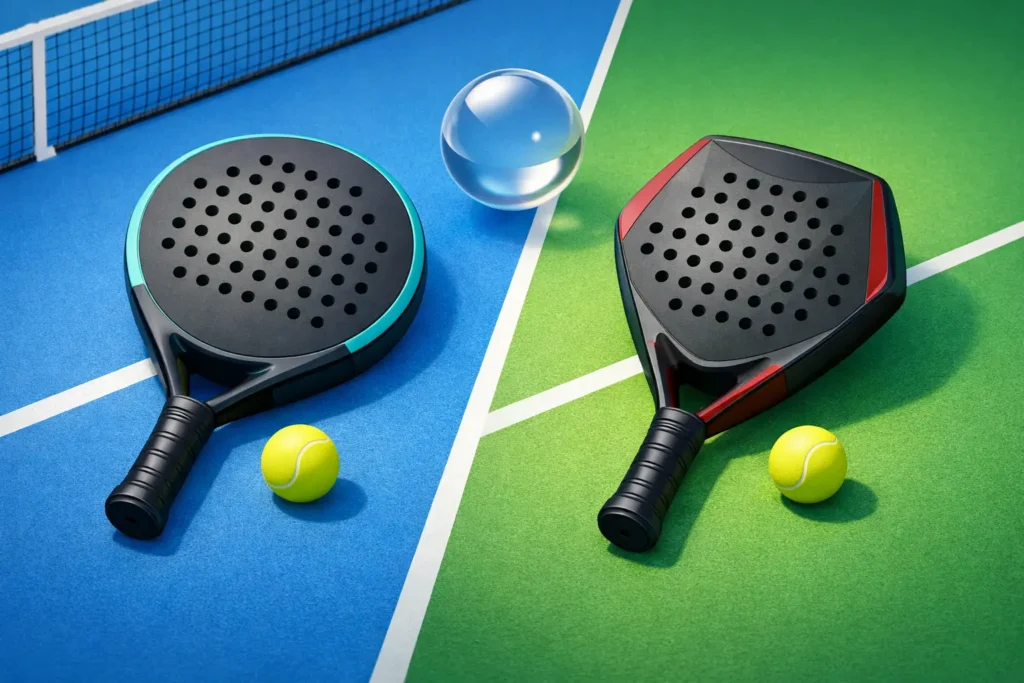
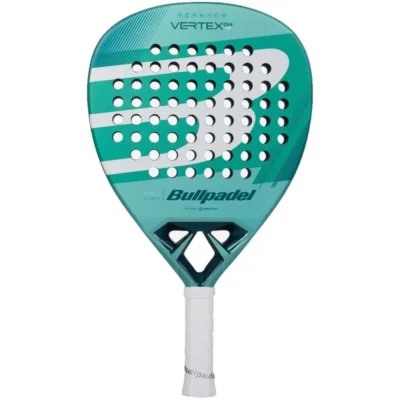
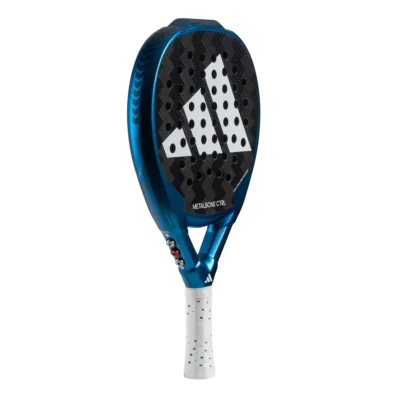
Control rackets are often round in shape, with a lower balance and a larger sweet spot. That makes them more forgiving, especially if you do not hit the ball perfectly every time. They tend to feel easier in defence and more stable when you are under pressure.
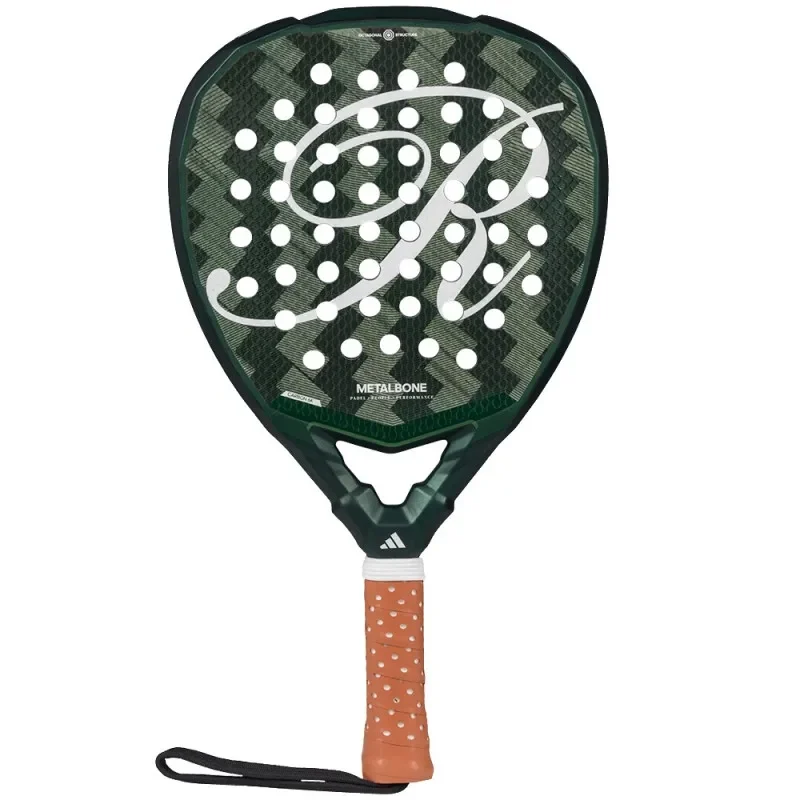
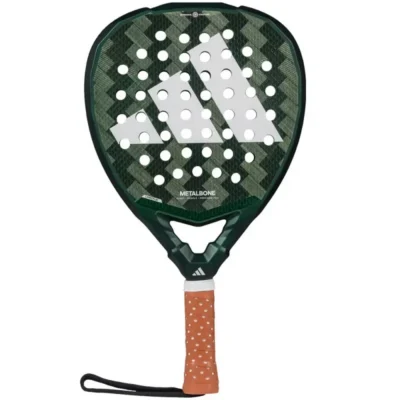
Power rackets are commonly diamond-shaped, with a higher balance and a smaller sweet spot. More of the weight sits towards the head, which can help generate stronger shots. The trade-off is that they are usually less forgiving and can feel harder to manage in quick exchanges or on off-centre hits.
There are exceptions, of course. Some teardrop and hybrid rackets blur the line, and some advanced control rackets still offer plenty of attacking potential. But as a rule, round means more control and diamond means more power.
Who should choose a control padel racket?
If your priority is consistency, a control racket usually makes more sense. This is especially true for beginners, improving intermediates and players who build points patiently rather than trying to finish every rally with one big shot.
A control racket helps when your game includes lots of returns, lobs, blocks and steady volleys. It gives you a bit more margin for error, which matters far more than many players realise. One extra ball back in play each game can be the difference between putting pressure on opponents and gifting them easy points.
It is also a smart choice if you are still working on timing. Padel is fast, and many recreational players overestimate how often they strike the ball cleanly. A larger sweet spot can hide small mistakes and let you play with more freedom.
For players with elbow or shoulder sensitivity, control models can sometimes feel friendlier too, especially when paired with softer materials. That does not mean every control racket is arm-friendly, but lower balance and easier manoeuvrability often help reduce strain.
Signs control is the better fit
You will probably suit a control racket if you often feel rushed at the net, struggle to keep smashes in, or lose confidence after a few errors. The same applies if you defend more than you attack, or if your matches are won through placement rather than outright hitting power.
A control racket does not make you passive. It simply gives you a more forgiving platform to construct points well.
Who should choose a power padel racket?
A power racket suits players who already have decent technique and want more help finishing points. If you like to attack overheads, pressure opponents with fast volleys and take control at the net, a power model can make your strengths more dangerous.
This type of racket generally rewards clean contact and confident swing speed. When used well, it can produce heavier shots and more penetration off the racket face. That is useful if you play an aggressive style and often get chances to punish short balls.
The key phrase there is used well. A power racket is not a shortcut for players who lack timing or struggle with consistency. In fact, for many club players it does the opposite. The smaller sweet spot and head-heavy feel can make simple defensive shots harder, especially late in matches when reactions slow down.
If you are an advanced player or a strong intermediate with solid technique, the trade-off may be worth it. You give up some forgiveness but gain more finishing ability.
Signs power is the better fit
Power may suit you if you regularly dominate the net, hit overheads cleanly and feel limited by a softer or more control-focused racket. It can also make sense if your current racket feels too light in attack or if your game naturally revolves around forcing short replies and ending points quickly.
What beginners usually get wrong
The most common mistake is buying for the player you want to become instead of the player you are now. A beginner sees advanced players using powerful diamond rackets and assumes that is the fast route to improvement. Usually, it is the fast route to mishits.
For most newer players, control is the better starting point. You get more comfort, easier handling and more reliable contact. That lets you develop technique properly, which matters far more than chasing extra power too early.
Another mistake is focusing on attack alone. Padel is not just about smashing. A large part of the game is defending glass rebounds, blocking hard shots and resetting points under pressure. If your racket makes those jobs harder, the occasional big winner does not make up for it.
Why intermediates often need a more honest answer
Intermediate players are the group most likely to be torn between the two. You can defend well enough to want more attack, but not always cleanly enough to handle a demanding power racket every point.
This is where hybrid options become attractive. A teardrop shape or balanced all-round racket can give you a useful middle ground – enough control in defence, enough pop in attack. If your game changes depending on opponents, court conditions or partner, hybrid often gives the most flexibility.
Still, it helps to be honest about where you win points. If you win through consistency, a control racket remains the smarter buy. If your technique is strong and you regularly create attacking chances, moving towards power can be justified.
How shape, balance and feel affect your game
Shape gets the most attention, but balance and feel often matter just as much.
Low-balance rackets feel quicker in the hand. They are easier to manoeuvre on volleys, blocks and defensive pickups. High-balance rackets can hit harder, but they may feel slower in fast exchanges.
Then there is hardness. Softer rackets tend to offer more comfort and easier ball output, while harder rackets can provide more precision and power for stronger players. Again, there is no universal best option. A soft control racket may be ideal for one player and too vague for another.
Weight matters too. A slightly heavier racket can add stability and punch, but if it tires your arm or slows your reactions, the benefit disappears. Comfort over two sets matters more than how a racket feels for five minutes.
So which one should you buy?
If you are a beginner, buy control first. You will learn faster, defend better and play with more confidence.
If you are intermediate, choose based on your actual match pattern, not your highlight shots. If you are solid from the back, value placement and still have occasional timing issues, stay with control or go hybrid. If you attack well, strike overheads cleanly and want more put-away power, then a power racket becomes a realistic option.
If you are advanced, the decision is more tactical. Some advanced players still prefer control because it suits their game plan and keeps unforced errors low. Others want maximum pressure and accept less forgiveness. At that level, style matters more than labels.
A simple test helps. Ask yourself which problem frustrates you more: not being able to finish points, or making too many mistakes trying to finish them. If it is the first, look towards power. If it is the second, control is probably your answer.
At 7padel, the easiest way to shop smart is to filter by playing style and level first, then compare the rackets that fit how you actually play.
The right racket should make the game feel simpler, not harder. Choose the one that supports your strengths today, and you will play better while giving yourself room to improve tomorrow.