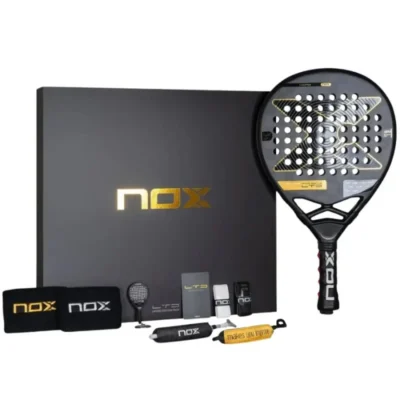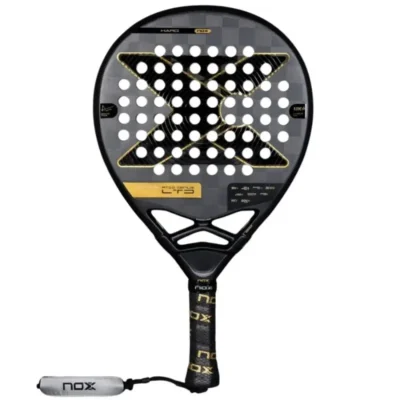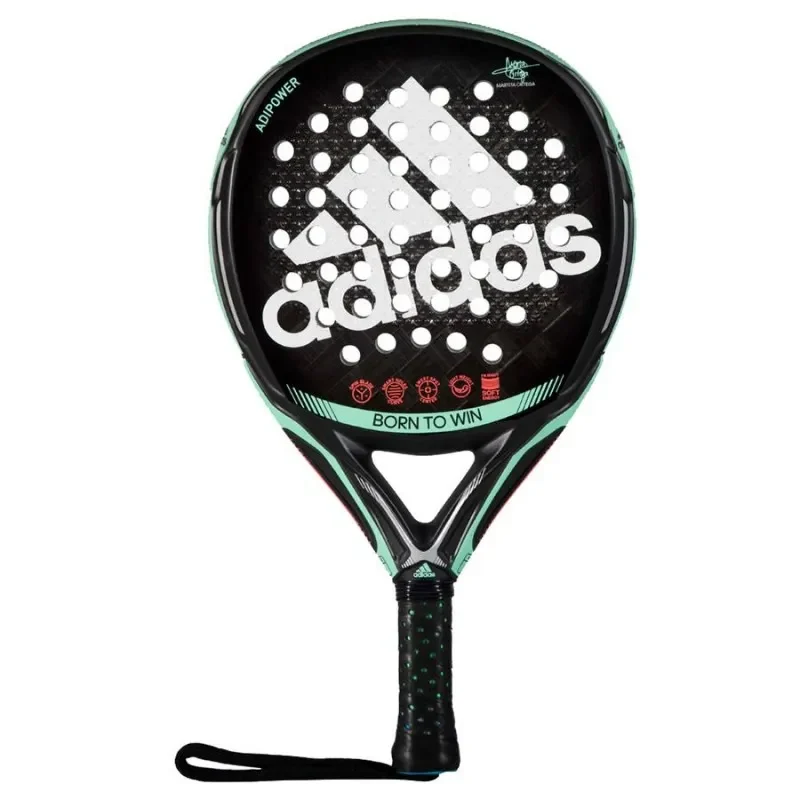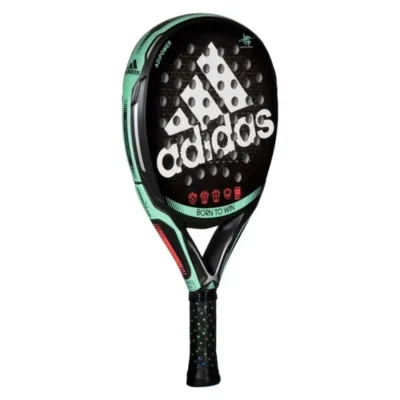
If you have ever felt stuck between a control racket that keeps everything tidy and a power racket that gives you extra punch, a hybrid shape usually solves that problem.
That is why so many players end up looking at hybrid models once they move past the very basics. The main appeal is simple: you get a racket that feels more balanced across different parts of the game, without forcing you too far towards one extreme.
What are the main hybrid padel racket benefits?
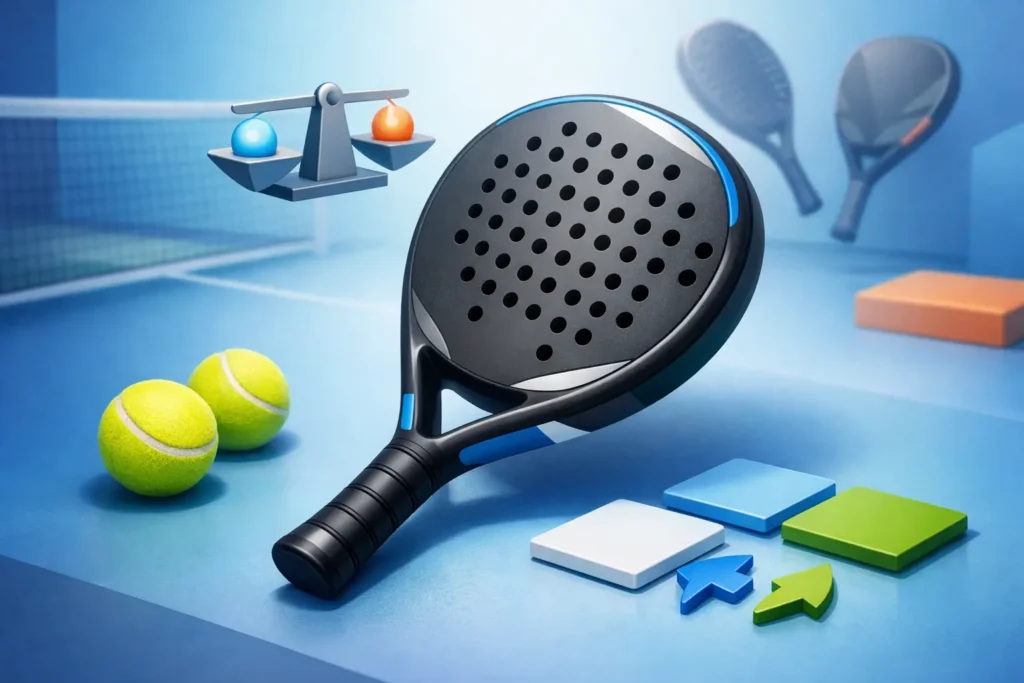
The biggest hybrid padel racket benefits come down to versatility. A hybrid racket is designed to sit between round and diamond shapes, which means it aims to offer a more even mix of control, manoeuvrability and attacking potential.
For many players, that balance is exactly what makes it appealing. You can defend comfortably from the back of the court, react quickly in volleys, and still get enough help when you want to speed up viboras, bandejas or overheads. It is not a magic fix, but it is often the most forgiving option for players who do a bit of everything.
The sweet spot is usually more accessible than on an out-and-out power racket, while the balance point is often a little higher than on a pure control model. In practice, that means the racket can feel lively without becoming demanding. If you are improving and your playing style changes from match to match, that flexibility matters.
Why hybrid rackets suit so many players
A lot of players do not fit neatly into one category. You might like to build points patiently, but still want the option to finish them aggressively. Or you may play mostly defensively but need a racket that does not leave you short when the ball sits up.
That is where hybrid rackets make sense. They are especially useful for intermediate players because that level is often about adding more variation to your game. Once you start using the glass better, volleying with more intent and looking for stronger overheads, an overly specialised racket can feel limiting.
Beginners can benefit too, provided the racket is not too heavy or too hard in feel. A beginner-friendly hybrid model often gives enough support to learn proper technique without feeling too blunt. At the same time, it leaves room to grow, so you are less likely to outgrow it quickly.
Advanced players also choose hybrid shapes, but usually for a more specific reason. Some want a match racket that adapts to different opponents and court situations rather than chasing maximum power on every shot. If your game is based on all-round pressure, transitions and consistency, hybrid can be a smart fit.
Hybrid vs control and power rackets
To understand the benefits properly, it helps to compare hybrid rackets with the other two common categories.
A round control racket usually has a lower balance and a larger, more forgiving sweet spot. It is often easier to manoeuvre and tends to reward clean placement. That makes it excellent for defence, touch shots and players who value consistency first. The trade-off is that it may not give you the same natural help on attacking shots.
A diamond power racket usually shifts more mass towards the top of the frame. When you strike well, it can produce heavier overheads and more aggressive finishing power. The downside is that it often asks more from your timing and technique, especially under pressure.
A hybrid racket sits in the middle. You sacrifice a little of the extreme control of a round model and a little of the outright punch of a diamond model, but in return you get a racket that covers more situations well. For many shoppers, that is a better real-world deal than buying for one shot they hit twice a set.
Where a hybrid racket helps most on court
The benefit of a hybrid racket is not just theoretical. You usually feel it most during the messy, in-between moments of a match.
At the back of the court, the racket can feel stable enough to reset points and absorb pace without becoming sluggish. On volleys, it often gives a nice mix of quick handling and firmness, which helps when exchanges speed up. In overhead situations, you generally get more attacking support than with a control racket, but without the harsher feel some power rackets can bring.
This balance is particularly useful in amateur matches, where rallies are rarely perfect and players need help in several areas at once. You might defend one point, counterattack the next, then rely on touch in the short game. A hybrid racket can move with you through those changes without constantly exposing a weakness.
Hybrid padel racket benefits for improving players
If you are moving from beginner to intermediate level, this is usually the sweet spot for a hybrid racket.
At that stage, you are still building consistency, but you are also starting to hit with more intent. You want a racket that forgives poor contact, yet rewards better technique when you swing faster or take the ball earlier. Hybrid models often do that better than more specialised shapes.
They can also help with confidence. When a racket feels too demanding, players often hold back and play safely. When it feels too soft or passive, they struggle to put opponents under pressure. A good hybrid can sit in that useful middle ground where you feel comfortable trying more shots without losing control of the basics.
That makes racket choice simpler as well. Instead of overthinking every technical detail, you can focus on finding the right weight, core feel and brand preference within the hybrid category. For many players, that is the quickest route to a racket that genuinely suits their game.
The trade-offs to know before you buy
Hybrid does not automatically mean best for everyone. It means balanced, and balanced is only useful if that matches how you play.
If your priority is maximum control, especially for slower, placement-heavy play, a round racket may still be the better option. If you are an aggressive advanced player who wants the most explosive overhead possible and has the technique to manage it, a diamond model may still suit you better.
There is also variation within the hybrid category itself. Some hybrid rackets lean closer to control, with softer foam and easier handling. Others lean towards power, with a firmer feel and a slightly higher balance. So it is worth looking beyond the shape label and considering the full setup.
Weight matters. A lighter hybrid racket is usually easier to handle and kinder on the arm, while a heavier one may give more stability and power. Surface texture, frame stiffness and core density all change the playing experience too. Two hybrid rackets can look similar on paper and still feel very different in hand.
How to choose the right hybrid racket
Start with your level and your most common match situation, not your ideal version of yourself.
If you are still improving consistency, go for a more forgiving hybrid model with medium or soft feel and manageable weight. If you already play confidently at the net and want more put-away power, you can move towards a firmer hybrid with a slightly head-heavier balance.
Think honestly about what wins and loses you points. If your problem is timing under pressure, a demanding racket will not fix it. If your issue is lack of penetration on attacking shots, an ultra-control setup may hold you back. The best buying decision usually comes from identifying your current game, not chasing a professional style that does not match it.
Brand preference can play a part as well. Different brands shape their hybrid rackets with slightly different priorities, whether that is comfort, power, touch or feel. Shopping from a store with a broad mix of recognised padel brands makes that comparison much easier, because you can narrow options by level and playing style rather than guessing.
For players who want practical guidance without a lot of noise, 7padel keeps that process simple by grouping rackets around exactly those decisions.
So, are hybrid rackets worth it?
For a large number of players, yes. The reason is not hype. It is that padel is a game of transitions, and hybrid rackets are built to handle those transitions better than more specialised options.
They help when you want control without feeling underpowered, and power without losing too much forgiveness. That makes them one of the safest and smartest choices for players who want one racket that can do a lot of jobs well.
If you want a racket that grows with your game instead of boxing you into one style too early, hybrid is usually a very sensible place to start.