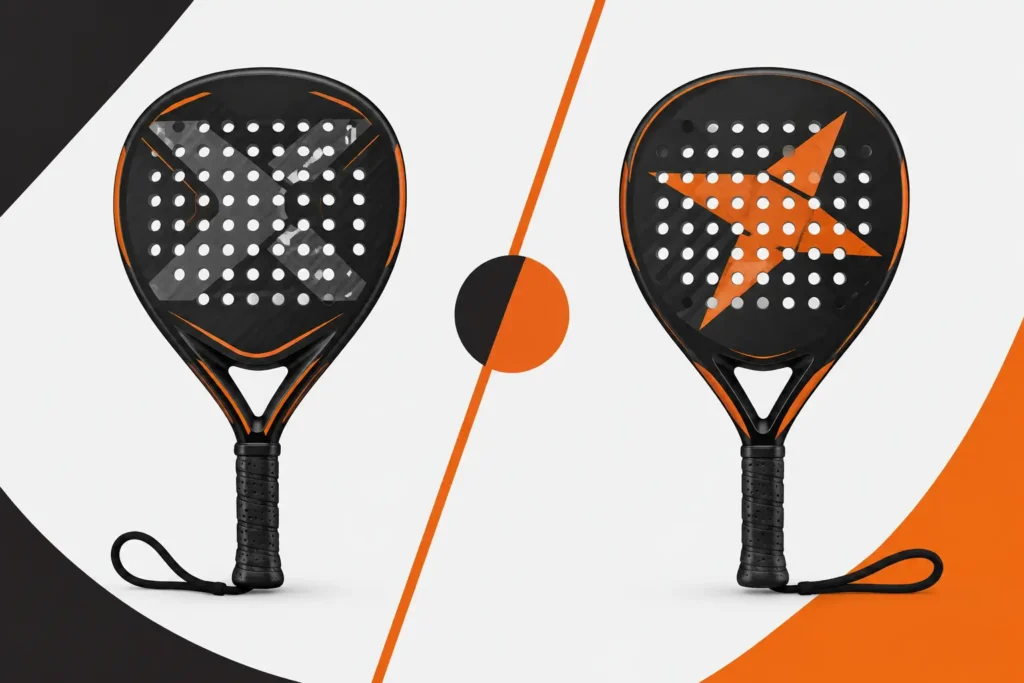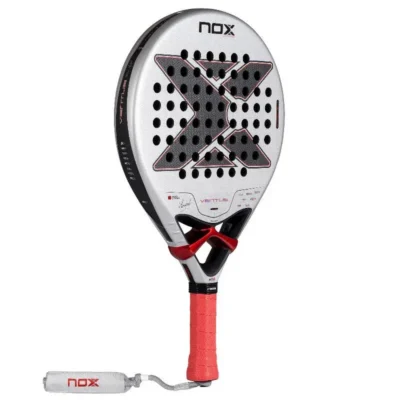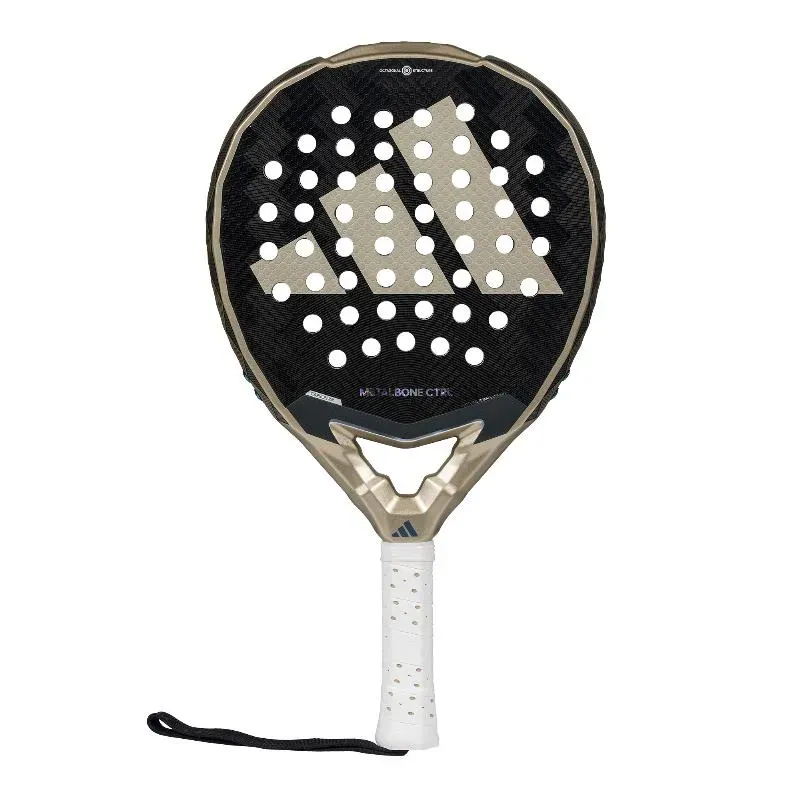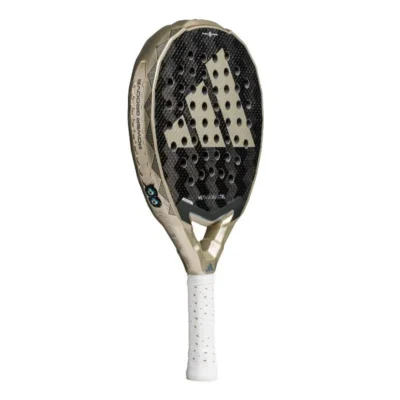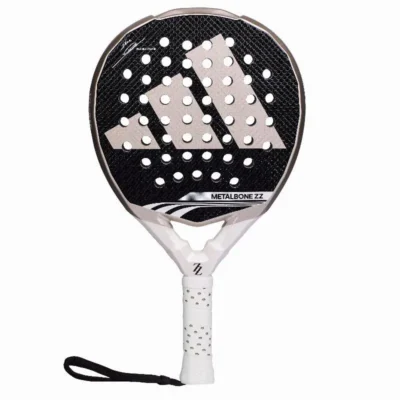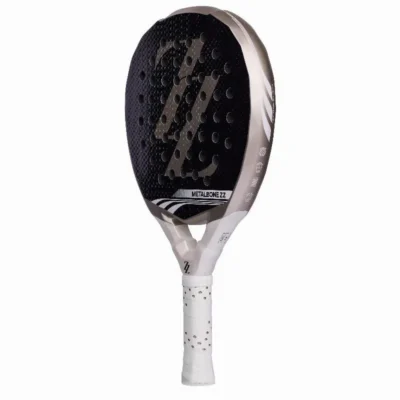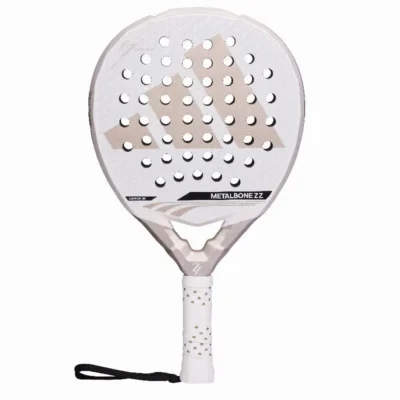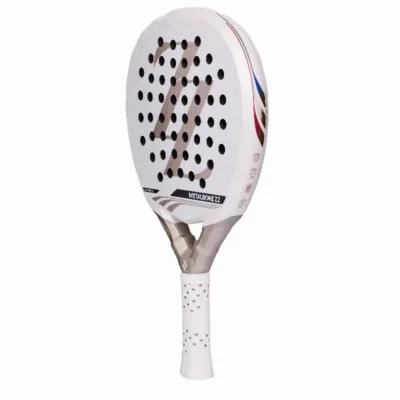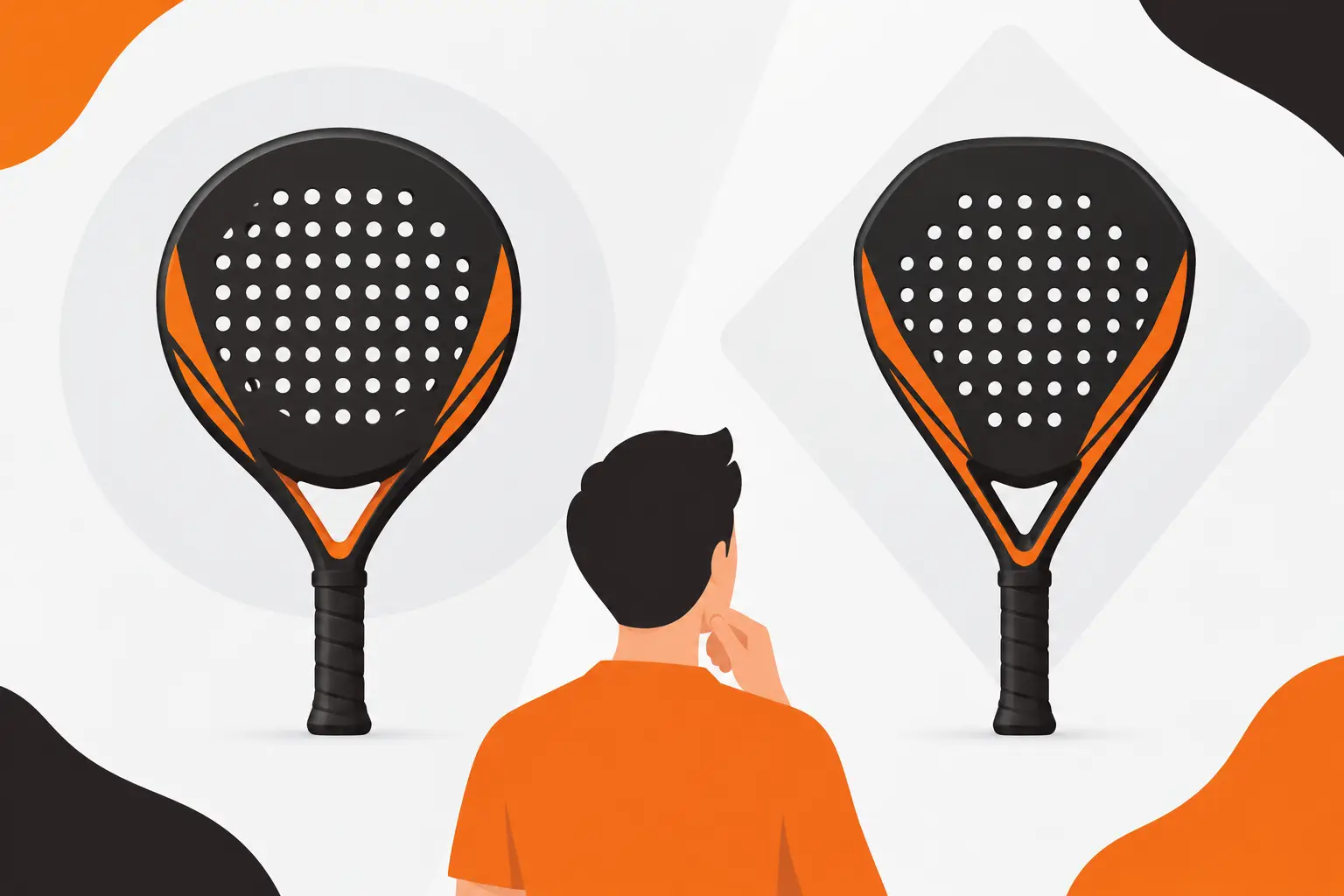
A racket can make your best shot feel easier, but it cannot rescue the wrong fit. That is the real choice behind round versus diamond rackets: do you need help building consistent contact, or do you already create clean contact and want more attacking punch? The right answer depends on your level, technique and the situations you face most often on court.
Round and diamond shapes sit at opposite ends of the padel racket spectrum. One usually makes the game calmer and more forgiving; the other rewards confident, aggressive swings. Neither is automatically better. The smart buy is the one that gives you more of what your game currently needs.
Round versus diamond rackets: the key difference
The headline difference is the position of the sweet spot. A round racket has a larger sweet spot placed closer to the centre of the face. A diamond racket has a higher sweet spot, nearer the top edge. That small design change affects how the racket feels in almost every shot.
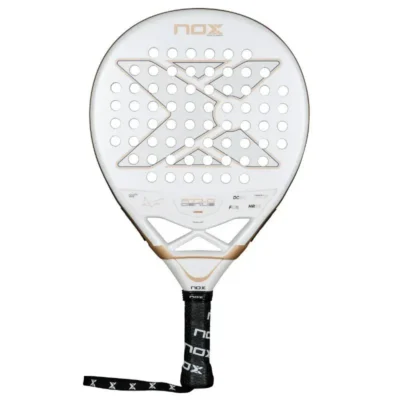
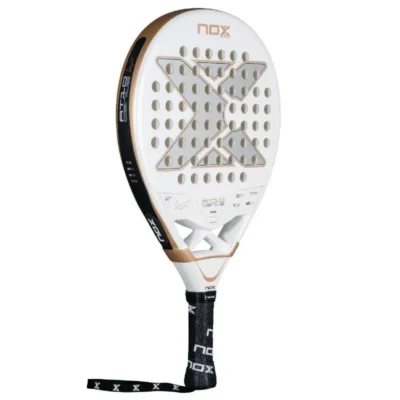
Round rackets are normally easier to control because the ball meets the most responsive part of the face more often. Their balance tends to be low to medium, meaning more weight sits nearer the handle. This makes the racket easier to manoeuvre at the net, more comfortable in defence and less demanding when your timing is not perfect.
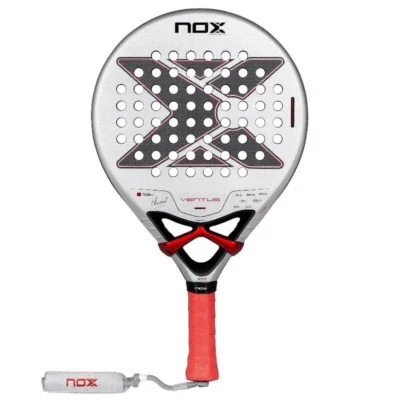
Diamond rackets are built with more weight towards the head, giving them high balance. That creates extra leverage through smashes, viboras and aggressive volleys. The trade-off is clear: a higher balance racket can feel slower to move into position and less forgiving when you strike outside the sweet spot.
Shape matters, but it is not the whole story. Weight, balance, face material, core density and surface texture can all change the final feel. A soft diamond racket may be more manageable than a hard, head-heavy one, while a firm round racket can still offer plenty of pace. Use shape as your starting point, then look at the full specification.
Why choose a round padel racket?
A round racket is usually the safest choice for beginners, improving players and anyone who values placement over outright power. It helps you learn the core shots properly because it gives useful feedback without punishing every off-centre hit.
From the back of the court, a round shape makes it easier to return fast balls and play controlled lobs. At the net, its quicker handling helps with reaction volleys and compact blocks. You may not produce the same effortless power on an overhead smash as you would with a diamond model, but good technique can still generate plenty of speed.
This shape also makes sense for players who play once or twice a week and want a racket that feels reliable from the first game. If you often find yourself late to the ball, struggle to control volleys or feel arm fatigue after a session, lower balance is likely to help.
Best suited to
Round rackets are a strong fit for beginners, defensive players, control-focused intermediates and players returning after an injury break. They are also a sensible option for an advanced player who wins points with consistency, placement and court craft rather than constant power shots.
Do not mistake control for a lack of performance. A quality round racket with a firmer face can be highly precise and powerful in the right hands. The difference is that it asks less of you when the rally gets quick or messy.
Why choose a diamond padel racket?
Diamond rackets are designed for players who want to finish points. The high balance can add speed and weight to overheads, especially when you hit above shoulder height. If your game is built around attacking the net, putting pressure on opponents and taking the ball out of court, the extra punch can be very appealing.
The benefit shows most clearly on smashes and attacking volleys. With a full, confident swing, the racket’s head weight helps drive the ball forward. Players who naturally generate good racket-head speed can turn this into a serious weapon.
But diamond shapes are not a shortcut to power. If you do not consistently strike the upper part of the face, you may lose control rather than gain pace. Defensive shots can feel harder, quick exchanges at the net require more preparation, and a head-heavy racket can tire the arm during long matches.
Best suited to
A diamond racket is generally best for advanced players and confident intermediates with sound technique. It suits aggressive right-side players who look for winners, as well as left-side players who regularly attack overheads. That said, position is less important than playing style. A patient left-side player may still prefer a round racket, while a strong attacking right-side player might enjoy a diamond model.
If you are moving from a round racket, consider a lighter diamond or a softer construction first. You will get a taste of the shape’s attacking potential without jumping straight into the most demanding option.
The middle ground: when a hybrid shape is better
Many players do not need to choose the extreme end of either category. Hybrid, teardrop or drop-shaped rackets sit between round and diamond designs. They usually place the sweet spot slightly higher than a round racket but retain more forgiveness and manoeuvrability than a diamond.
This is often the best direction for intermediates. You may have developed consistent contact and want more power on overheads, but still need help in defence and fast net exchanges. A hybrid shape gives an all-round response that suits players who adapt their game to the point rather than following one fixed style.
If you are unsure between round and diamond, a hybrid racket is not a compromise in a negative sense. It is often the most practical choice for club players who want one racket to cover a wide range of opponents, court conditions and match situations.
Match the racket to your current game
Start with honesty, not ambition. Buying the most aggressive racket in the hope that it will make you an aggressive player often leads to frustrating sessions. Choose for the shots you can repeat under pressure, then let your technique develop from there.
A round racket is likely right for you if you prioritise consistency, defend frequently, like to construct points and want easy handling. A diamond racket is worth considering if you already strike the ball cleanly, attack overheads with confidence and are happy to accept a smaller margin for error in return for added power.
Also think about weight. A lighter racket is easier to manoeuvre and can reduce fatigue, while a heavier model may offer more stability and ball penetration. For many adult players, a racket in the mid-350g range is a sensible place to begin, but balance matters as much as the number on the scale. A 360g head-heavy diamond can feel more demanding than a slightly heavier low-balance round racket.
Face and core materials deserve attention too. Softer EVA cores tend to provide a more comfortable, forgiving feel and easier ball output at slower speeds. Firmer cores and carbon faces offer a crisper response and more precision when you swing hard, but they can feel less comfortable and less helpful for newer players.
A simple way to make the decision
Picture the last three matches you played. Were you losing points through mishits, rushed volleys and difficult defensive returns? Go round, or consider a soft hybrid. Were you controlling rallies comfortably but struggling to put away high balls and short volleys? A diamond or higher-balance hybrid could add the attacking edge you are missing.
It is also worth resisting the temptation to copy a professional’s racket exactly. Professional players have exceptional timing, strength and technique, and many use customised setups. Your racket should make your own game more effective, not make every rally feel like a test.
At 7padel, the easiest way to shop is to filter by level and playing style first, then compare weight, balance and materials within that shortlist. Recognised brands offer different takes on each shape, so there is no single ‘best’ round or diamond racket – only the one that fits your hands, swing and goals.
Choose the racket that lets you play with confidence on the shots that matter most. More controlled returns today often lead to more attacking opportunities tomorrow, and when your technique is ready, the extra power will be there to use.