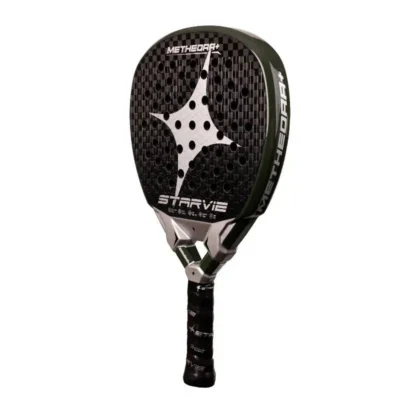
A Nox AT10 is not a racket you buy simply because Agustín Tapia plays with one. The range has earned its reputation because it gives attacking players serious output without forcing them into a hard-to-handle power shape. In this Nox AT10 review, we look at what makes the family so popular, who it suits, and why choosing the right version matters.
The short answer is that the AT10 is an advanced hybrid racket built for players who want to build points with control, then finish them with confidence. It sits between a round control racket and a diamond power racket, giving it broad appeal for ambitious intermediate and advanced players.
What makes the Nox AT10 different?
The AT10 range is designed around a teardrop or hybrid shape, a medium-to-high balance and a generous sweet spot for its performance level. That combination is the key to its character. It feels more manoeuvrable and forgiving than a full diamond racket, yet more direct and attacking than a traditional round model.
On court, that means the AT10 works especially well for players who do not want to choose between defending comfortably and hitting with intent at the net. You can block a fast volley, play a controlled bandeja or vibora, and still get enough help through the ball when the opportunity for a finishing smash appears.
Nox usually offers the AT10 with several face constructions, including 12K and 18K carbon options, alongside editions with different cosmetic finishes and updated technologies. These are not just different paint jobs. The carbon choice changes how the racket feels at impact.
A 12K version is often the more accessible route into the range. It tends to feel slightly livelier and more elastic, which can make it easier to generate depth when defending and add pace on slower swings. An 18K version generally delivers a firmer, more precise response. Players who strike the ball cleanly and like a crisper connection often prefer it, especially in quick volley exchanges.
The exact specification can vary by model year, so it is worth checking the individual product details before buying. The bigger decision remains the same: choose the face feel that matches your technique, not simply the carbon number that sounds most premium.
Nox AT10 review: feel, control and power
Control from the back of the court
The AT10 performs well when the match gets uncomfortable. From the back glass, its hybrid format gives enough sweet spot to help with defensive lobs and compact counter-attacks. It is not as automatic as a large, round control racket, particularly if your contact point is inconsistent, but it is far from unforgiving.
The medium-to-high balance asks you to prepare properly. If you arrive late to the ball, the head can feel less nimble than a light round racket. Players with sound positioning, however, will appreciate the extra weight through the shot. It helps the ball travel without needing to overhit.
This is where the AT10 makes sense for improving players. It rewards better mechanics rather than masking every mistake. If you are moving from a soft beginner racket and want more stability in defence, the step up can feel substantial without becoming overwhelming.
Confidence at the net
At the net, the Nox AT10 feels at home. The racket is stable enough for firm volleys, and the shape gives a good blend of reach and control when you are looking to take time away from opponents. Its response is particularly useful for players who like to play an active net game instead of simply placing the ball safely.
The firmer AT10 versions are excellent for punch volleys and aggressive returns. You get a clean, controlled exit rather than a springy rebound. Softer or more flexible versions can be the better choice if you prefer the racket to supply more easy pace, especially during colder conditions when the ball feels heavier.
For viboras and bandejas, the AT10 offers a convincing mix of stability and touch. It does not feel as head-heavy as many pure power rackets, so changing direction or playing a slower tactical ball is realistic. That versatility is a major reason why the AT10 range appeals to all-court players.
Is there enough power for a smash?
Yes, but it is controlled power rather than free power. The AT10 can produce a very heavy smash in experienced hands, especially when you use full body rotation and make contact high. It is not designed to launch the ball effortlessly like the most aggressive diamond-shaped rackets.
That trade-off will suit many players. A racket that offers maximum smash power can be demanding in defence, fast exchanges and long matches. The AT10 gives you a more balanced package: enough authority to attack, with the control to keep playing smart when the finish is not on.
If your game is built almost entirely around flat smashes and overhead winners, a more head-heavy power racket may be a better fit. If you win points through pressure, placement, spin and well-timed acceleration, the AT10 is likely to feel more useful across a full match.
Which Nox AT10 should you choose?
The right AT10 depends on your current game, not the level you hope to reach next month. A player who is still developing consistent contact will usually get more value from a slightly softer, more forgiving version. It will help with depth, reduce harsh feedback and make the racket easier to use during defensive situations.
A stronger intermediate player who has reliable technique and spends plenty of time at the net can look towards a firmer 12K or 18K option. The reward is greater precision, a more solid volley and clearer feedback on sliced overheads. These models ask more from you, but they also give more back when your timing is right.
Advanced players should focus on feel. Choose the 12K-style response if you want a little more ball output and a livelier touch. Choose the 18K-style response if you value a firmer strike, controlled acceleration and a more connected feel through the point. Neither is automatically better – the right choice depends on whether you want help from the racket or maximum precision from your own swing.
Weight matters too. A lighter racket can improve manoeuvrability and reduce fatigue, while a heavier one generally offers more stability and force. If you have had elbow or shoulder discomfort, do not assume a heavier, firmer model will improve your game. Comfort and confidence are performance features as well.
Who should avoid the AT10 range?
The AT10 is not the easiest choice for complete beginners. A beginner-friendly round racket with a lower balance will usually make learning simpler, particularly when returning serves, defending off the glass and finding the middle of the face consistently.
It may also be the wrong choice for players who want an ultra-soft feel. Even the more accessible AT10 versions are performance-led rackets, and the firmer models can feel demanding if you rely on the racket to create all your power.
That said, a confident improver who trains regularly may grow into an AT10 quickly. If you are past the first stages of padel and now want a racket that supports a more attacking, all-court style, it is one of the most sensible upgrades in the premium category.
Is the Nox AT10 worth buying?
For the right player, absolutely. The Nox AT10 range delivers a rare balance of control, manoeuvrability and attacking potential. It is not a shortcut to Tapia-level winners, but it is a serious racket for players who want to develop an intelligent, confident game.
Before choosing, be honest about how you score points. If you value placement, volley pressure, spin and dependable defence as much as big smashes, the AT10 deserves a place at the top of your shortlist. Pick the face feel and weight that suit your swing, then let the racket support the game you actually play – not just the highlights you want to hit.