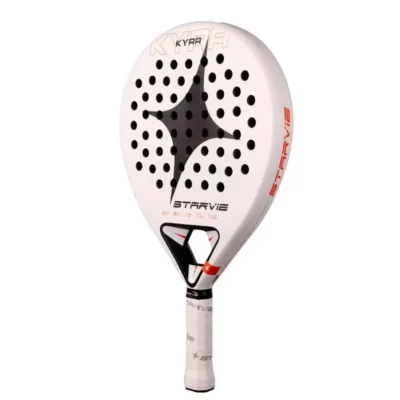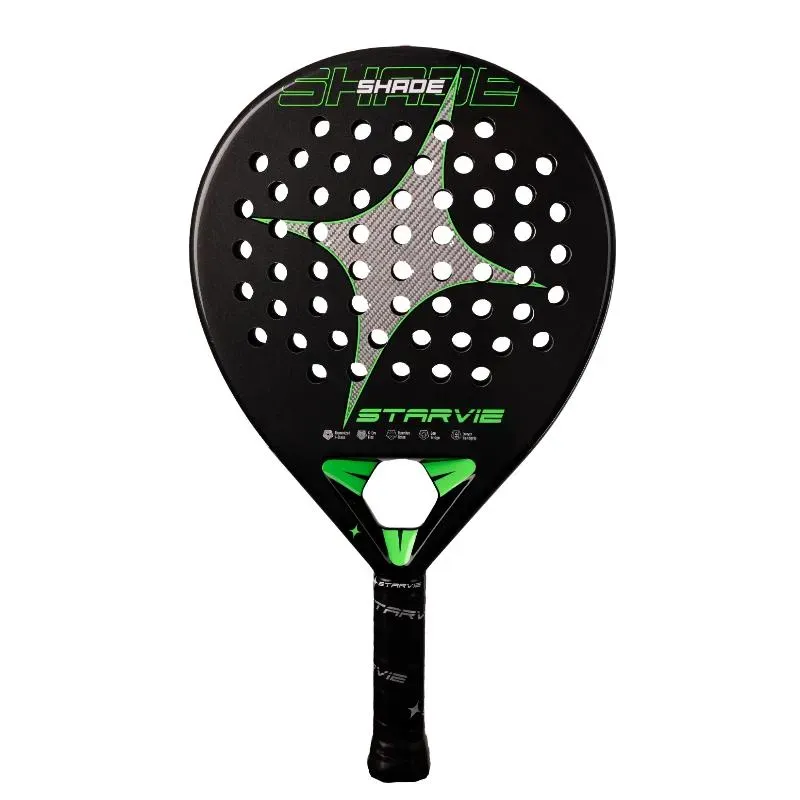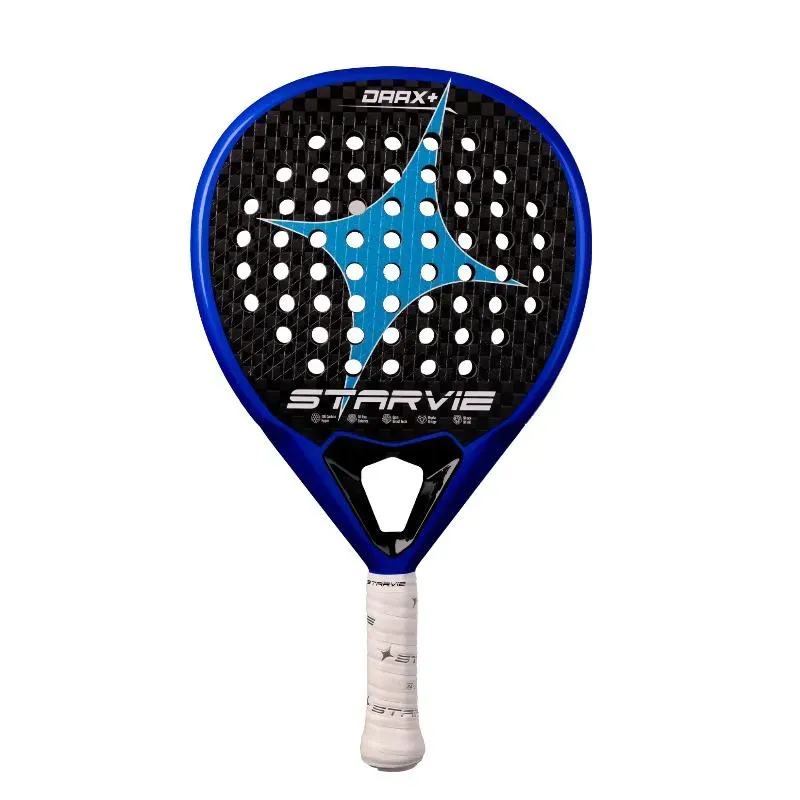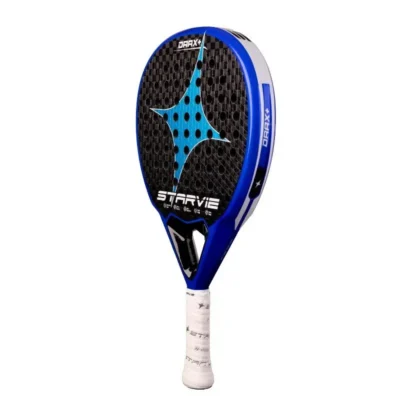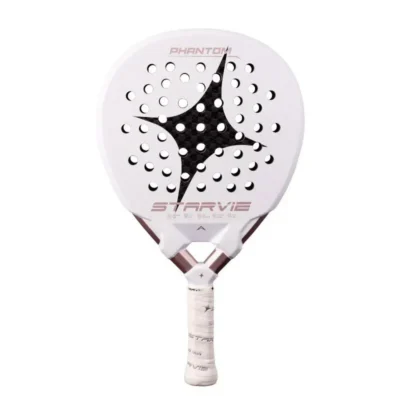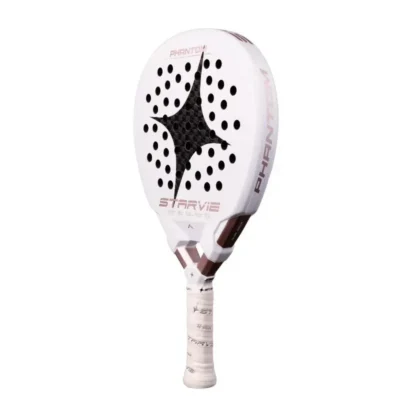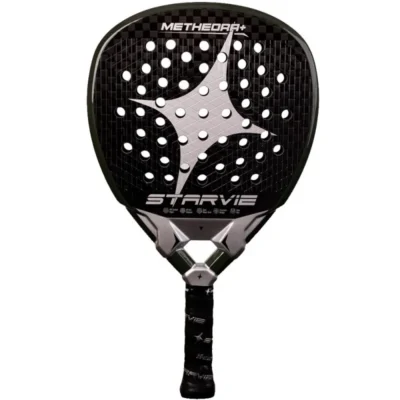
A padel racket rarely gets damaged in one dramatic moment. More often, it happens through small knocks: scraping the glass while defending, catching the court on a low ball, or clipping the fence during a fast volley. Learning how to protect padel racket edges is one of the simplest ways to keep your racket looking better and playing consistently for longer.
The frame edge takes most of the punishment, especially on rackets with a larger sweet spot or a diamond-shaped head. A good edge protector will not make a racket indestructible, but it can take the hit that would otherwise chip the paint, crack the surface, or expose the frame.
Why padel racket edges need protection
The outer edge of a padel racket is its first line of defence. Even players with clean technique will occasionally touch the court, wall, or mesh. That is part of padel. Quick reactions and close-to-the-glass shots leave very little room for a perfect swing every time.
Small cosmetic marks are usually harmless. However, repeated impacts around the same area can become more serious. If the paint and outer layers are damaged, moisture and dirt may reach deeper into the racket structure. On a carbon racket, a crack near the frame can affect durability and, in some cases, the feel of the racket at contact.
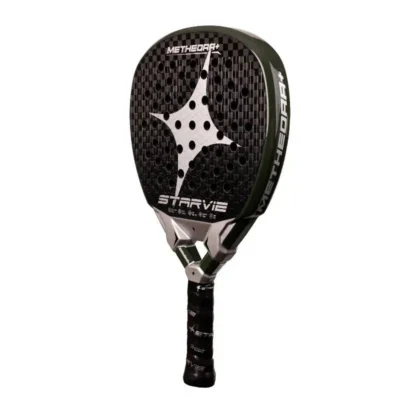
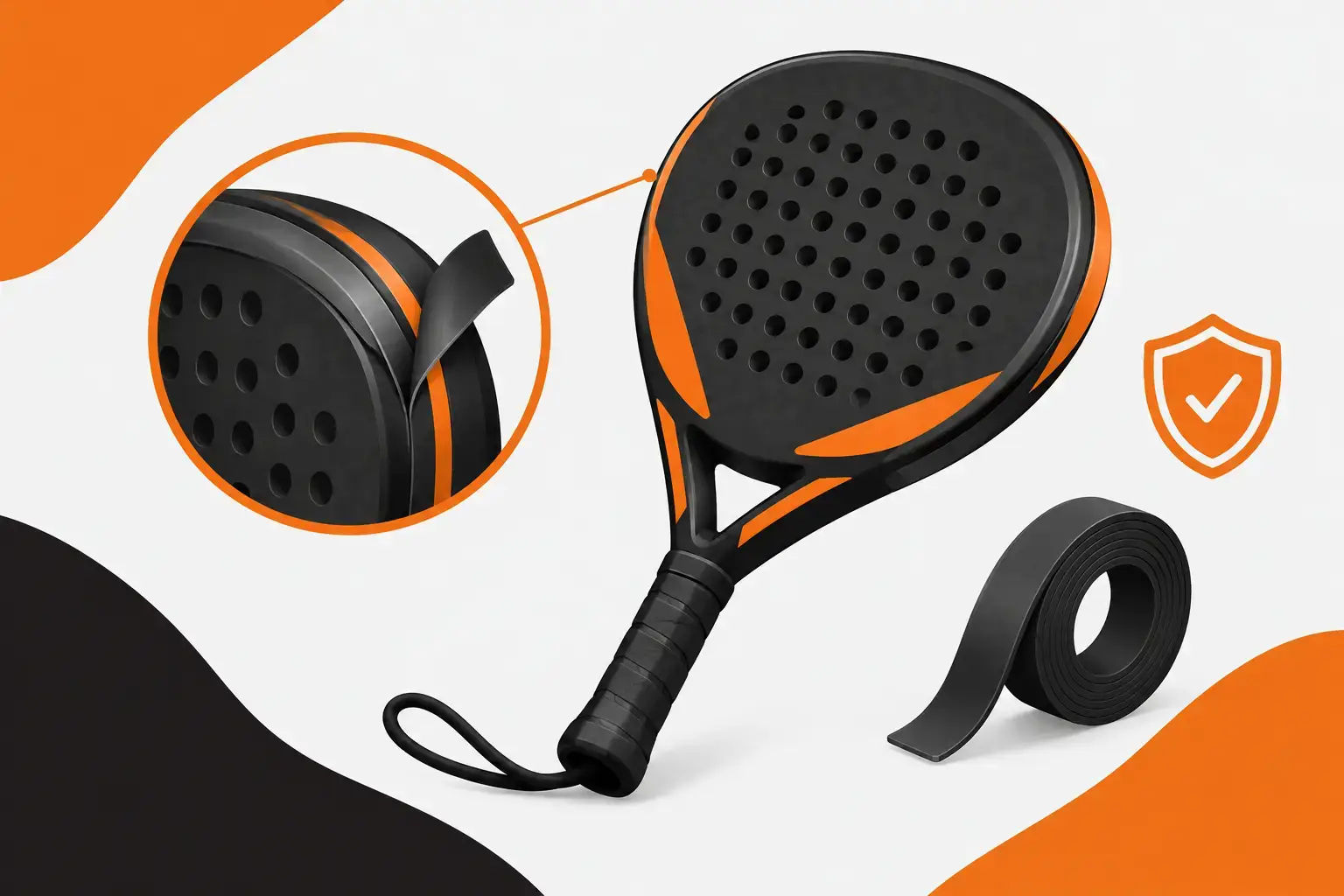
An edge protector adds a sacrificial layer over the top of the frame. It absorbs scuffs and light impacts, helping to preserve the racket underneath. For a player who has invested in a quality Adidas, Bullpadel, Head, Nox, Starvie, Wilson, or Babolat racket, that small extra layer is a sensible purchase.
Protect padel racket edges with an edge protector
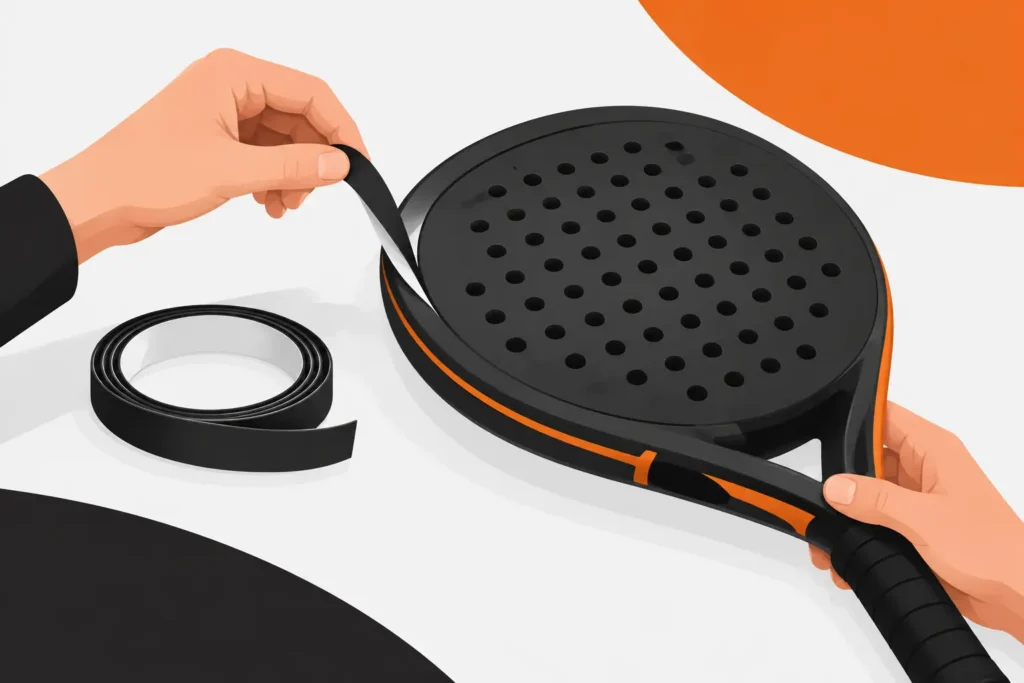
The most practical option is a self-adhesive padel racket protector. These strips are made to fit around the upper frame, where contact with the court and walls is most common. They are generally lightweight, flexible, and easy to replace when worn.
Not every protector is the same. Thin transparent protectors are a good choice if you want discreet coverage with minimal change to the racket’s balance. Thicker protectors offer more impact resistance but add a little weight to the head. That can make the racket feel slightly more head-heavy.
For beginners and intermediate players, a standard lightweight protector is usually the best fit. It provides useful protection without changing the handling of the racket too much. Advanced players who already know exactly how their racket should feel may prefer an ultra-thin option, particularly if they use a manoeuvrable control racket.
Choose the right width and thickness
Before buying, look at the shape and profile of your racket. Most protectors are designed for the upper curve of standard round, teardrop, and diamond rackets, but the width of the frame can vary between models.
A protector that is too narrow leaves the most exposed part of the edge uncovered. One that is too wide can fold over the face of the racket or create raised sections that collect dirt. Choose a strip that covers the outer rim neatly without running far onto either hitting surface.
Thickness is a trade-off. More material gives more protection, but it also adds grams at the top of the racket. A few grams may not sound like much, yet weight at the head is noticeable because it affects swing balance. If your racket already feels heavy or powerful, avoid a very thick protector. If you prioritise durability and play a lot on fast courts near the glass, extra coverage may be worthwhile.
How to fit a padel racket protector properly
Fitting a protector takes only a few minutes, but preparation makes a big difference. Adhesive will not bond well to a dusty, damp, or greasy surface.
First, clean the upper edge of the racket with a soft cloth. Make sure it is completely dry. If there is old adhesive from a previous protector, remove it carefully before fitting the new one. Do not use harsh products that could affect the paint or surface finish.
Start in the centre of the racket head rather than at one side. Peel back a small section of the backing paper, line the protector up with the outer edge, and press it down gradually. Work from the centre towards one side, then return to the centre and repeat on the other side.
Keep gentle tension on the strip as you apply it, but do not stretch it aggressively. Stretching can cause the protector to pull back over time or leave uneven areas around the curve. Use your thumb to press along the full length, paying close attention to the curved corners where lifting is most likely.
Once fitted, leave the racket somewhere dry for a few hours before playing if possible. This gives the adhesive time to settle properly. If the ends start to lift after a few sessions, trim only the loose section with small scissors rather than pulling the whole protector away.
Habits that reduce edge damage
A protector works best alongside sensible racket care. It will handle light scrapes, but it cannot prevent every type of damage.
Avoid leaving your racket loose in the boot, especially alongside heavy balls tubes, water bottles, or other equipment. Use a racket bag with a dedicated compartment and keep the racket in its cover when travelling. Extreme heat is another avoidable problem. Do not leave it in a hot car for hours, as high temperatures can affect the foam, adhesives, and surface materials.
On court, focus on controlled recovery after low shots. Beginners often scrape the floor because they chase every ball with the racket face too open. There will always be moments when the court gets in the way, but better positioning and earlier preparation reduce unnecessary contact.
If you regularly hit the frame when defending at the back of the court, consider whether your racket shape matches your current level. A large, forgiving round racket can make defensive shots easier to control than a high-balance diamond model. Protecting the edge is useful, but choosing the right racket helps protect the rest of your game too.
When should you replace the protector?
Check your edge protector every few weeks, or more often if you play several times a week. Replace it when it has deep cuts, loose sections, heavy peeling, or areas where the frame is visible again.
Do not wait for the protector to fall off completely. A partly detached strip can trap sand and moisture against the racket, and it may catch during a shot. Removing and replacing a worn protector is quick, inexpensive, and far better than risking further frame damage.
It is also worth inspecting the racket itself when you change protectors. Look closely for cracks, soft spots, or unusual separation around the frame. A surface scuff is normally nothing to worry about. A crack that spreads, feels raised, or changes the sound of the racket on impact deserves attention before your next match.
Common mistakes to avoid
The biggest mistake is fitting a protector over dirt or moisture. It may look fine at first, then start lifting after one or two sessions. Clean and dry the frame properly before application.
Another common error is choosing the thickest protector available without considering balance. More protection is not always better if it makes your racket slow through the air or harder to control at the net. Start light unless you know you need heavier coverage.
Finally, do not rely on a protector to hide structural damage. It can cover scuffs, but it cannot repair a cracked frame. If your racket has visible damage beneath the surface, keep an eye on it and avoid hard impacts until you know it is safe to use.
A fresh protector is a small detail, but it helps you look after the racket you trust point after point. Fit one well, replace it when it wears out, and spend your next match thinking about the ball rather than the scrape you just heard.