A fresh can of padel balls changes the feel of a match immediately. The bounce is lively, shots come cleanly off the racket face and serving feels more predictable. But padel ball lifespan is shorter than many players expect, especially once the tube has been opened. Knowing when a ball is genuinely worn out helps you enjoy better games without replacing balls after every session.
Padel ball lifespan: the practical answer
For most recreational players, a new set of pressurised padel balls will play well for two to four matches. In hours, that is roughly four to eight hours of play. Players who hit hard, play several times a week or use balls on abrasive courts may notice a drop in performance sooner.
There is no single number that suits everyone. A relaxed doubles match with newer players places less stress on a ball than a fast match full of powerful smashes, bandejas and volleys. Temperature matters too. Cold conditions make balls feel slower and flatter, while heat can make them feel livelier at first but may speed up pressure loss over time.
For a social weekly game, one tube may be enough for a few sessions. For league matches, coaching, tournaments or serious practice, fresh balls more often make sense. The goal is not to replace them on a fixed schedule. It is to recognise when their performance is affecting the quality of your play.
Why padel balls lose their bounce
Most padel balls are pressurised. Their rubber core contains air pressure, and that internal pressure is what gives a ball its familiar bounce and response. The felt outer layer also matters, but pressure loss is usually the main reason a ball starts to feel dead.
Every impact slightly compresses the core. Over repeated shots, a small amount of air gradually escapes through the rubber. The process continues even when the balls are sitting in an opened tube. That is why a ball can look almost new yet feel noticeably slower after a handful of matches.
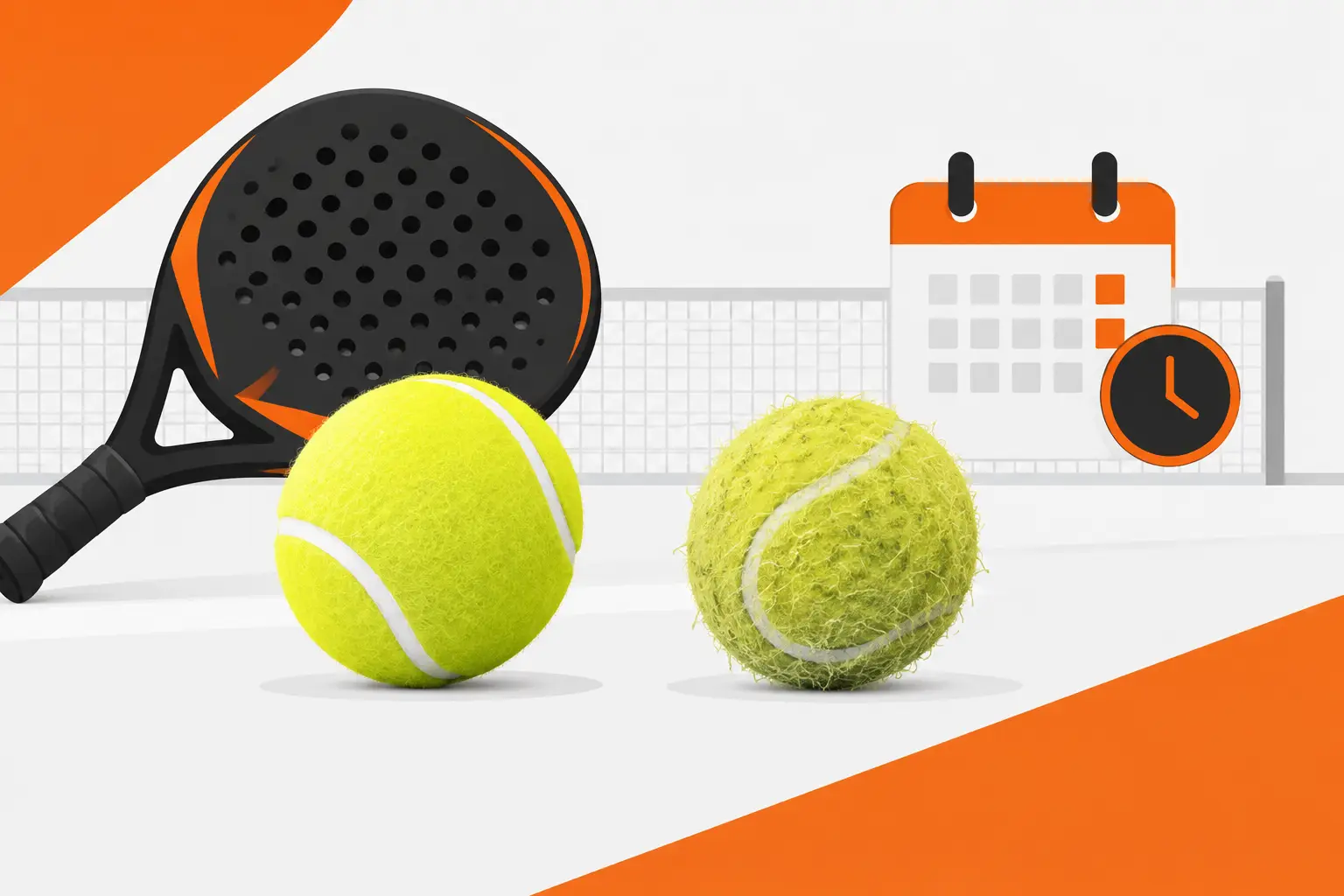
The felt wears at the same time. As it becomes fluffier or thinner, the ball travels differently through the air and can pick up dirt and moisture more easily. A heavily worn felt surface will not necessarily mean the ball has lost all pressure, but it is another sign that the set is past its best.
Padel balls and tennis balls are similar, but they are not always interchangeable. Padel balls are generally designed to suit the smaller court and the game’s typical playing conditions. Choosing balls made specifically for padel gives you the most consistent feel for training and matches.
Signs it is time to change your padel balls
The clearest sign is a low, dull bounce. Drop a ball from around shoulder height onto a hard, flat surface and compare it with a new ball if you have one. A tired ball will rebound visibly lower and feel less responsive when squeezed or struck.
During a match, worn balls often make rallies feel slower than usual. You may need to swing harder to create depth, volleys can feel soft, and lobs may not travel as cleanly. This is particularly noticeable if you rely on spin or like to attack from the back of the court.
Look at the felt as well. If it is very fluffy, patchy, smooth in places or carrying a lot of court dust, the ball will no longer fly consistently. Any ball with a split seam, crack, deformation or water damage should be removed straight away. It is not worth playing with a damaged ball just to finish a tube.
Try not to judge only one ball in isolation. A mixed set with one flat ball creates uneven bounces and makes practice less useful. Replace the set when there is a clear difference between balls, rather than keeping one or two tired balls in rotation.
How court, weather and playing style affect lifespan
Harder, rougher court surfaces wear felt faster. Sandy courts can be particularly tough on balls, as grit sticks to the felt and changes the way they move. Wet courts are another problem. Moisture makes balls heavier, affects bounce and can damage the felt quickly.
Players who hit with pace will naturally get fewer good sessions from each tube. There is nothing wrong with that – a ball that faces repeated hard volleys, overheads and wall contact is doing more work. Busy coaching sessions also wear balls out quickly because the same balls are hit continuously with little rest.
Cold weather deserves a little patience. Balls feel less lively in low temperatures, even when they are still in good condition. Before deciding they are flat, give them a few games to warm up through normal play. If they remain slow and low after that, pressure loss is likely the issue.
Store balls properly and get more from each tube
Good storage will not make a worn-out ball new again, but it can slow down pressure loss and prevent avoidable damage. Keep opened balls in their tube with the lid firmly fitted, or move them to a dedicated ball pressuriser. A pressuriser maintains higher external pressure around the balls and can extend their useful playing life, particularly for players who play once or twice a week.
Store the tube indoors at a stable temperature. Avoid leaving it in a cold car boot overnight, beside a radiator or in direct sun. Extreme heat and cold are not kind to rubber or felt. Keep balls dry too, and do not put damp balls back in a sealed tube after a rainy or humid session.
A simple routine works well: open a fresh tube for match play, keep the used balls in a pressuriser or sealed tube, then use them for training once their match performance starts to fade. Older balls are still useful for serve practice, drills and feeding balls to a partner. When the bounce becomes unreliable, they can be retired from play altogether.
Should beginners replace balls as often as advanced players?
Usually, no. Beginners can often get more sessions from a tube because rallies are slower and there is less high-impact hitting. They may also benefit from slightly softer, slower balls during practice, as the pace is easier to manage while learning positioning and contact.
That said, balls should not be so flat that they make learning harder. A dead ball encourages players to overhit, reduces feedback at contact and makes it difficult to understand how a proper padel ball should react off the glass and court. Fresh enough balls help beginners build confidence and consistency.
Intermediate and advanced players tend to notice pressure loss earlier. If you are working on overheads, controlled volleys, spin or tactical lobs, predictable bounce matters. Using fresher balls for important practice can make your sessions more realistic and help you assess whether a change in technique or racket choice is actually improving your game.
Buying smarter: how many tubes do you need?
A player who plays once a week can usually manage with a small rotation: one fresh tube for matches and one older set for practice. Regular players may prefer to keep several tubes at home, especially if they organise games or do not want to arrive at court with tired balls.
Buying multipacks is often the practical choice when you know you will use them. It lowers the cost per tube and means you always have fresh balls ready for a competitive match. Choose recognised padel ball brands, then select based on the feel you prefer and the conditions where you play most often. Some players like a quicker, livelier ball; others prefer a more controlled response.
At 7padel, the simplest approach is to keep fresh balls for the games that matter, then give each set a second life in practice. It is a small equipment habit, but it keeps your sessions sharper and your money working harder.
The next time a rally feels strangely heavy, do not automatically blame your racket or your timing. Check the balls first. A fresh tube can be the easiest way to bring back the bounce, pace and enjoyment that made you book the court in the first place.