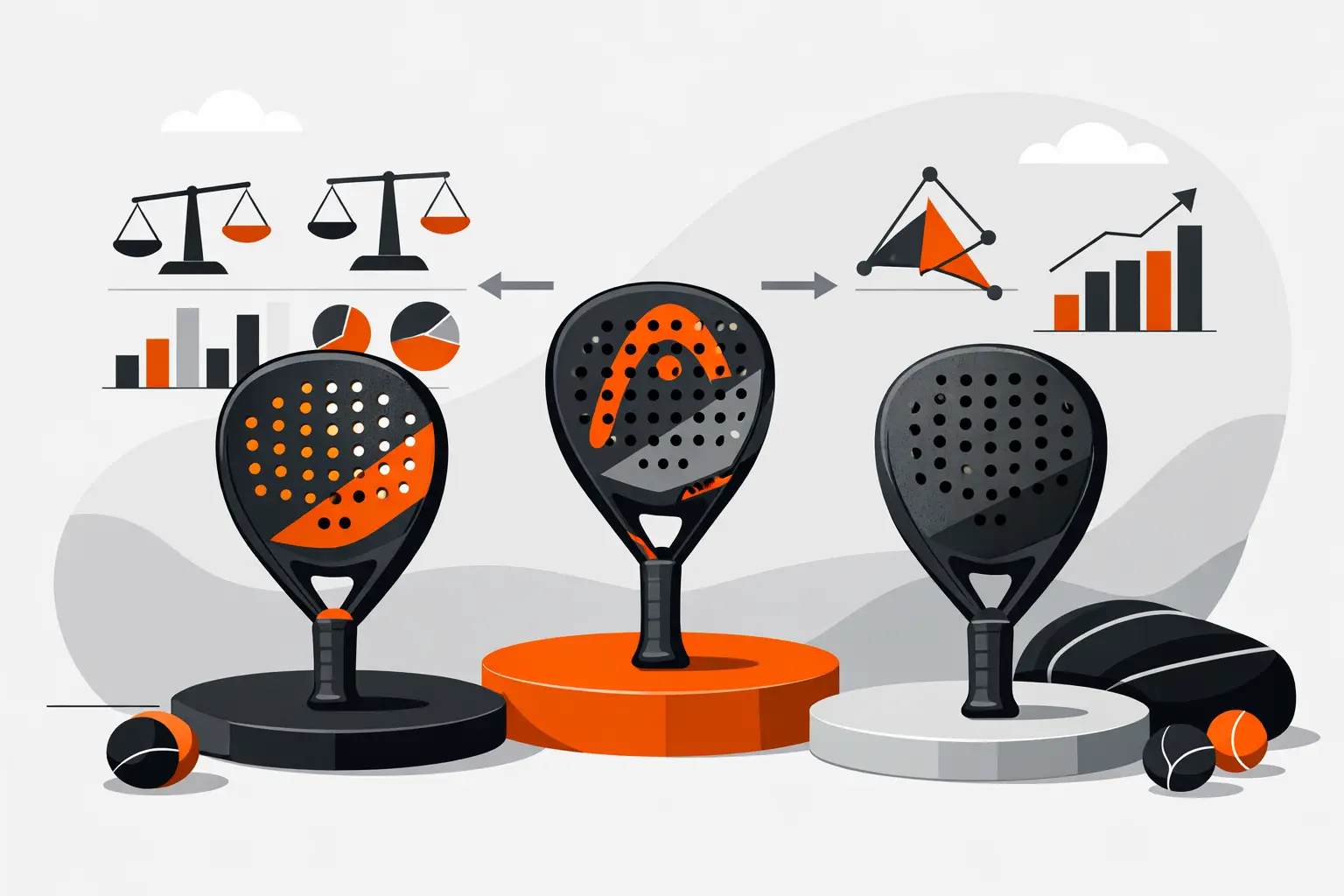
If you have narrowed your search to Head, you are already looking in the right place. A good head padel racket comparison is not really about finding one “best” racket – it is about matching the racket to how you actually play, how often you play, and what you want more of on court: control, easy power, or a bit of both.
Head has one of the clearest racket ranges in padel, but that does not always make the choice easy. On paper, several models can look close. In practice, the feel can be very different. That matters, because a racket that suits an advanced attacking player can feel demanding and unforgiving for a newer player, while a softer, easier option might feel too vague for someone who wants sharper response at the net.
Head padel racket comparison by playing style
The quickest way to compare Head rackets is by style rather than by marketing name. Most players shop more confidently when they ask a simple question first: do I want control, all-round balance, or outright power?
Control-focused Head rackets usually suit players who value placement, consistency and comfort. These tend to have a rounder shape, a larger sweet spot and a more forgiving response. If you are still building technique, or if you play a patient game with lots of resets, blocks and accurate placement, this category normally makes the most sense.
Hybrid Head rackets sit in the middle. They are a strong choice for intermediate players and for anyone who wants a bit of everything without committing to a very technical frame. You get enough manoeuvrability for defence, enough punch for overheads, and a feel that usually adapts well as your game improves.
Power-focused Head rackets are built more for aggressive players. These often come in diamond or diamond-hybrid shapes, with weight balance shifted towards the head. That setup can help generate more speed on smashes and volleys, but it usually asks more from your timing. If you hit late or off-centre, the racket can feel less helpful.
What really changes from one Head racket to another
A proper head padel racket comparison should go beyond category labels. The details that change your on-court experience are shape, balance, weight, surface feel and core firmness.
Shape and sweet spot
Round Head rackets give you the easiest access to control. The sweet spot is generally more central and more forgiving, which helps if your contact point is not perfect every time. This is why many beginners and lower intermediate players get on well with round models.
Teardrop shapes are usually the middle ground. They offer a blend of control and power, which makes them popular with all-round players. If you do not want to commit fully to a defensive or attacking frame, this shape is often the safest bet.
Diamond shapes tend to reward aggressive technique. They place more of the hitting surface and weight higher up, which can increase power potential. The trade-off is that they can feel harder to manage in defence and less forgiving on slower swings.
Balance and manoeuvrability
Two Head rackets can have a similar weight on paper and still feel completely different in hand. That is because balance matters as much as total weight. A head-heavy racket can hit a heavier ball, but it may feel slower when reacting at the net or digging out low balls near the glass.
A lower or medium balance often feels quicker and easier to control. This suits players who value fast hands, clean preparation and comfort over maximum power. If your arm gets tired easily, balance is worth paying attention to.
Soft versus firm feel
Head offers models with different levels of stiffness. Softer-feeling rackets usually provide more comfort and easier ball output. They can help newer players because the racket does more of the work at moderate swing speeds.
Firmer models give a crisper response and often more precision when you strike well. Advanced players tend to like that direct feedback, especially on volleys and overheads. The downside is that firmer rackets can feel less forgiving and, for some players, less comfortable over longer sessions.
Which Head racket type suits your level?
Skill level is not everything, but it is still one of the easiest ways to avoid a bad buy.
Beginners
If you are new to padel, the smartest move is usually a control-oriented or soft hybrid Head racket. Look for a round or teardrop shape, a manageable weight and a forgiving touch. You do not need the most aggressive frame in the range. What helps most at this stage is a larger margin for error.
Many beginners make the same mistake – they buy a power racket because it sounds more exciting. In reality, an easy-to-use racket often helps you improve faster. You defend better, keep more balls in play and build confidence sooner.
Intermediate players
This is where choice gets more interesting. Intermediate players often know what they want more of, but not always what they should give up to get it. If your game is balanced, a hybrid Head racket usually makes the most sense. You get enough control for rallies and enough power for put-aways without the racket becoming too specialised.
If you are moving towards a more attacking style, a slightly firmer or more top-heavy option can be a good step. Just make sure the racket still feels manageable in slower phases of the game. If it only feels good when you are hitting hard, it may not be the right all-match option.
Advanced players
Advanced players can make better use of the more demanding Head models. If you generate your own pace, time the ball well and attack confidently overhead, a firmer hybrid or power racket can be a strong fit. These models tend to offer better response when you hit cleanly and commit to your shots.
That said, advanced does not always mean power racket. Plenty of strong players prefer a control or hybrid setup because it helps them dominate through precision and quick reactions. The right choice depends on how you win points, not just how long you have been playing.
Popular Head ranges and how they differ
Head has produced several well-known padel families over the years, and the broad pattern is usually quite easy to understand.
The Gravity line is often associated with control and comfort. These rackets usually appeal to players who want a large sweet spot and a softer, more forgiving feel. For many club players, this is one of the easiest Head ranges to use.
The Speed line tends to sit in that useful middle ground. It often suits players who want versatility without feeling stuck in either a full control or full power setup. If you are the kind of player who wants one racket to handle a bit of everything, Speed models are often worth a close look.
The Delta line has traditionally leaned more towards power. These rackets usually target aggressive players who like to finish points and play with intent overhead. They can be very rewarding, but they are not always the easiest option for developing players.
The Extreme line has also been linked to stronger attacking play, often with a lively response. Depending on the model, it can suit players who want power with a modern, assertive feel. As always, the exact version matters, because one model generation can feel quite different from the next.
How to choose without overthinking it
If you are stuck between two Head rackets, make the decision based on your misses. That is often more useful than thinking about your best shots.
If you miss because you feel rushed, contact the ball late or struggle in defence, go more forgiving. If you miss because your shots sit up, your volleys lack punch or you want more threat overhead, go slightly more attacking. Your weak point usually tells you more than your highlight reel.
It is also worth being honest about frequency. If you play once a week, a demanding power racket may not give you the benefits it promises. If you play three or four times a week and already strike the ball cleanly, you can reasonably choose something more performance-led.
Price matters too, and so does value. Newer flagship models are not automatically the best buy for every player. Last season’s Head racket can often deliver the same playing style at a better price, which is exactly the kind of smart shopping many players prefer.
For players browsing a wider range, 7padel keeps the process simple by sorting racket options around level and style rather than drowning you in specs. That makes it easier to compare what actually matters.
The best Head choice is the one you can use well
A head padel racket comparison should leave you with a clearer decision, not more noise. If you want comfort and confidence, stay towards round and softer options. If you want balance, hybrid models are usually the safe and sensible place to start. If your game is built around pressure and attack, then the firmer, more powerful Head frames can make sense.
The right racket should help your normal game on an average night, not just your best game on a good day. Choose the one that fits how you play now, with just enough room to grow into it.