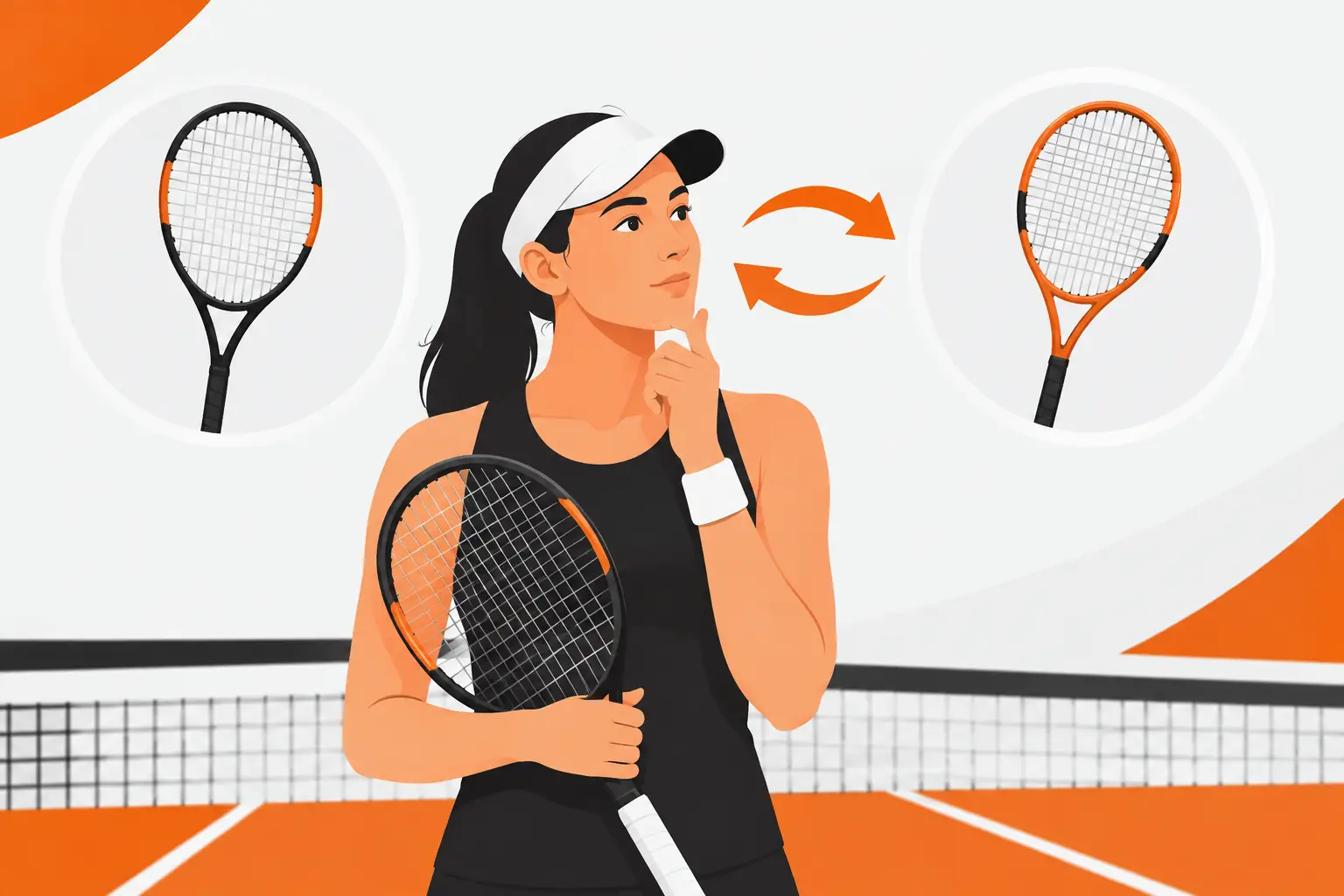
You can feel it when your racket has stopped helping you progress. Your volleys land short, defensive shots feel unstable, or you are generating more pace but cannot keep the ball under control. An intermediate player racket switch is not about buying the most aggressive-looking model on the shelf. It is about choosing a racket that supports the game you are starting to play now.
For many players, the move from a beginner racket is the first equipment decision that genuinely affects confidence on court. The right upgrade gives you more response, better shot direction and enough manoeuvrability to react quickly at the net. The wrong one can make a decent technique feel inconsistent.
When an Intermediate Player Racket Switch Makes Sense
There is no need to replace a racket simply because you have played for a certain number of months. Progress in padel is not a timetable. But if you regularly play matches, understand basic positioning and can hit forehands, backhands, volleys and bandejas with reasonable control, you may be ready for a more capable racket.
A switch is usually worthwhile when your current racket feels too soft or too light during faster exchanges. Beginner-friendly models often have a large sweet spot and easy handling, which is useful while learning. As your swing becomes more confident, though, that same easy feel can leave you wanting more precision and a firmer response.
You may also be ready if you have started to recognise your style. Perhaps you enjoy building points patiently from the back of the court. Perhaps you look to finish at the net whenever a lob falls short. Once you know what you do most often, choosing a racket becomes far simpler.
Do not confuse an upgrade with a move to the hardest racket available. A demanding diamond-shaped model with a high balance can reward excellent timing, but it can also punish late contact. For most intermediate players, a balanced step forward produces better results than an ambitious leap.
Start With Your Playing Style, Not the Brand Name
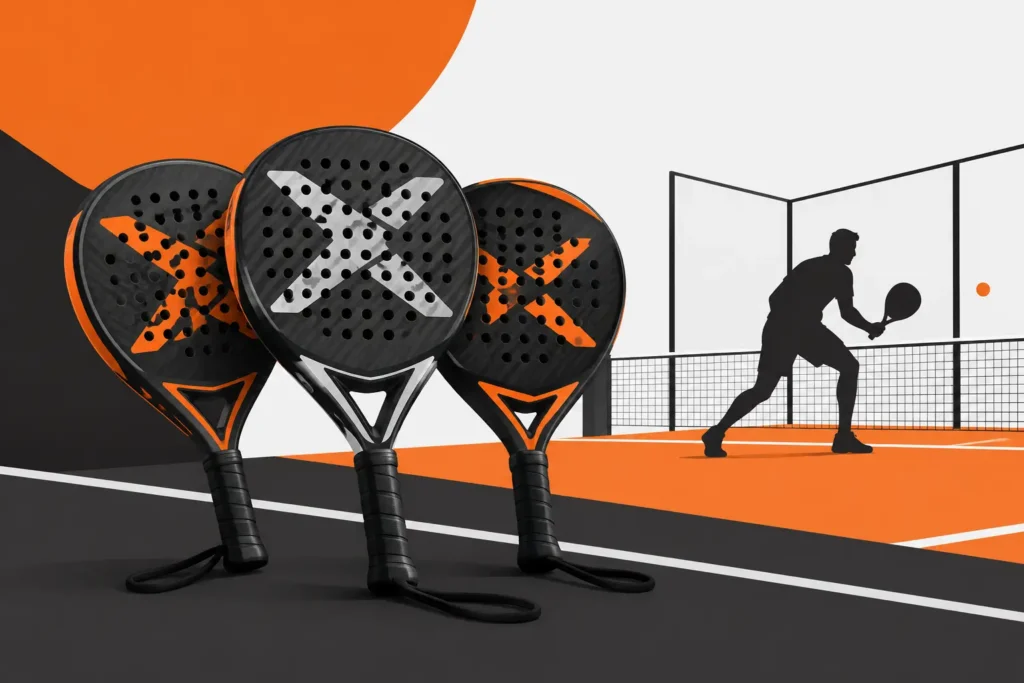
Recognised brands such as Adidas, Babolat, Bullpadel, Head, Nox, Starvie and Wilson offer excellent options, but brand alone should not make the decision. Start with the type of player you are and the part of your game you want to improve.
Choose round for control and confidence
A round racket places the sweet spot closer to the centre of the face. This makes it a strong choice for players who value consistency, defensive control and clean volleys. It is particularly sensible if you are still improving contact on overheads or often play long, tactical points.
Round does not mean weak. A quality round racket can still produce plenty of speed when you use good technique. It simply keeps the racket easier to manage when the pace rises.
Choose teardrop or hybrid for all-court play
Hybrid and teardrop rackets sit between round control models and diamond power models. Their balance is usually medium, with a sweet spot that is slightly higher than a round racket. For many players making an intermediate player racket switch, this is the most natural category.
You get help on volleys and overheads without giving up too much forgiveness from the back of the court. If you play on both sides, enjoy an all-round game or are not yet sure whether you are a control or power player, hybrid is a smart place to start.
Choose diamond only when power is already a strength
Diamond rackets are designed with a higher balance and a higher sweet spot. They can add punch to smashes, viboras and attacking volleys, especially for players who take the ball early and hit consistently above net height.
The trade-off is clear: they can feel slower in defence and less forgiving on off-centre contact. Choose this shape because it matches your game, not because power sounds more advanced. If your lobs, blocks and defensive shots are still a work in progress, a hybrid racket will often help you win more points.
Weight and Balance Matter More Than Most Players Expect
Two rackets can have the same shape but feel completely different in hand. Weight and balance affect how quickly you can prepare, how stable the racket feels at contact and how much strain it puts on your arm.
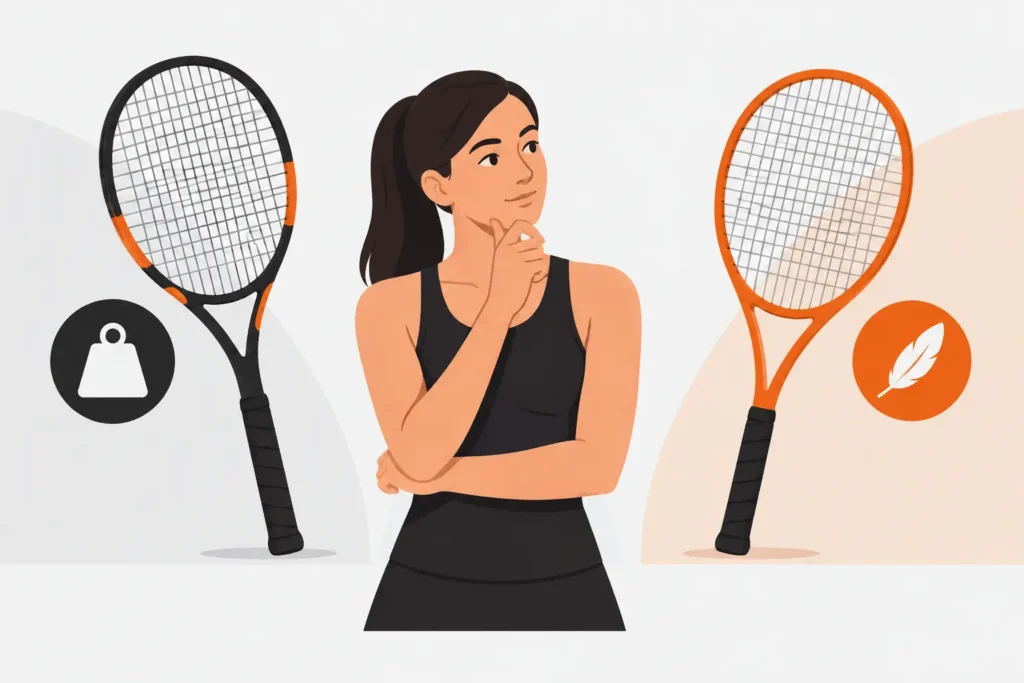
Most intermediate players will be comfortable around 355g to 370g before overgrips and a protector are added. A lighter racket can be quicker at the net and easier through long sessions. A heavier one can feel more solid when blocking hard shots and hitting overheads. Neither is automatically better.
Balance is just as important. Low balance keeps more of the weight near the handle, helping manoeuvrability and control. Medium balance suits versatile players. High balance puts more weight towards the head, offering extra leverage for attacking shots but demanding more from your wrist, shoulder and timing.
If you have had elbow, wrist or shoulder discomfort, avoid assuming that a heavier, head-heavy racket will solve a lack of power. A manageable weight, a comfortable grip and clean technique are usually the better route. When in doubt, stay close to the weight of the racket you already handle well and adjust only one variable at a time.
Foam, Face and Feel: Keep the Choice Practical
Racket specifications can quickly become confusing, but you do not need to memorise every material to shop well. Focus on feel.
Softer foam generally gives a more comfortable, forgiving response and helps the ball come off the face with less effort. It is useful for defensive shots and players who prefer comfort. Harder foam tends to feel more direct and precise, particularly on fast volleys and overheads, but it asks for cleaner contact.
The face material changes the sensation too. Fibreglass commonly offers a softer, more flexible feel, while carbon faces are usually firmer and more responsive. Many intermediate players enjoy a racket that combines accessible comfort with enough firmness to improve shot placement. There is no prize for choosing the stiffest carbon construction if it makes your game feel harder.
Texture can help create grip on the ball for slices and spin, although it will not replace technique. Think of it as a useful extra rather than the main reason to buy.
Four Signs You Are Choosing Too Much Racket
A racket should challenge your game a little, not make ordinary shots feel like a test. Be cautious if any of these sound familiar:
- You regularly mishit defensive balls after changing to a head-heavy model.
- Your elbow or shoulder feels sore after sessions despite no major change in training.
- You are losing accuracy on volleys while chasing extra smash power.
- The racket only feels good when you strike the ball perfectly.
These signs do not mean the racket is poor. They usually mean it does not suit your current technique or preferred role on court. A more balanced model can be the faster route to stronger match results.
Test Your Needs Against Real Match Situations
Before ordering, think about the points that decide your matches. If you are often defending deep in the corner, prioritise a forgiving sweet spot and quick handling. If you win points through stable net play, look for medium weight and a face that feels secure on volleys. If opponents are leaving short lobs, and you already finish overheads reliably, then a more attacking hybrid or diamond may suit you.
It also helps to be honest about how often you play. Someone on court once a week may prefer a comfortable, forgiving racket that is enjoyable from the first game. A player training several times a week may benefit from a firmer model that offers more precision as their technique develops.
At 7padel, filtering rackets by intermediate level, control, hybrid or power can narrow a large choice into a sensible shortlist. From there, compare shape, weight range and balance rather than getting distracted by marketing terms.
Make the Switch Without Overthinking It
The best racket change is usually a measured one. If you currently use a light, round beginner racket, moving to a medium-balance hybrid is a logical progression. If you already play confidently with a hybrid but want more authority on overheads, consider a slightly firmer or higher-balanced version before jumping straight to an extreme power model.
Give yourself a few sessions to adjust. A new racket can alter timing, especially on volleys and bandejas. Use the first matches to focus on clean contact and shot selection rather than trying to hit every ball harder. If the racket lets you defend calmly, volley with purpose and attack when the chance is there, it is doing its job.
Choose the racket that makes your normal game more reliable, then let your improving technique create the extra power. That is the switch that keeps paying off long after the first exciting hit.