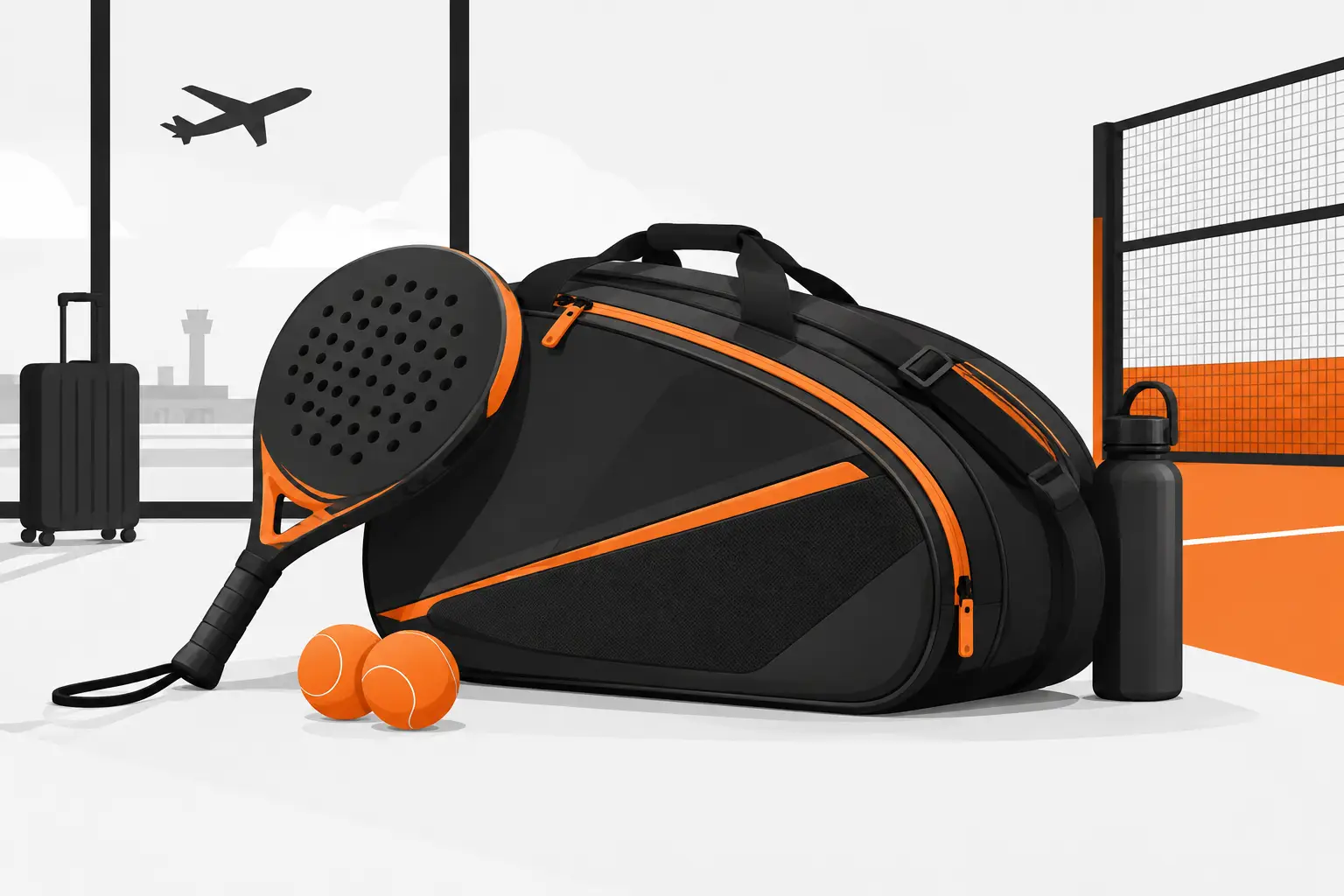
A good trip can be spoiled surprisingly quickly by one badly packed bag. A racket knocks against your shoes, damp kit sits beside clean clothes, and your grip feels cold and slick before you even reach the court. The best padel bags for travel keep your equipment protected, organised and easy to carry – whether you are driving to a weekend tournament or flying abroad for a padel holiday.
The right choice is not always the biggest bag. It is the one that fits the way you travel, the number of rackets you bring and how much kit you genuinely need. Here is how to choose without paying for features that will sit unused.
What makes a padel bag good for travel?
For local match days, a simple racket bag may be all you need. Travel asks more of it. Your bag may be carried through an airport, put in a car boot, stored at a hotel and used at the club every day. That means comfort, protection and practical storage matter as much as looks.
Start with the racket compartment. If you travel with a performance racket, it deserves more than a thin sleeve. A padded compartment reduces knocks during transport, while a thermal or insulated compartment offers extra protection against sharp changes in temperature. Heat can affect foam and materials over time, so thermal protection is particularly useful for players who leave their bag in a warm car or travel to sunny destinations.
The main compartment should have enough space for clothing, a towel, balls and small essentials without becoming a black hole. Separate sections are useful because shoes collect dust and moisture, while used clothing needs to stay away from your clean kit. A ventilated shoe compartment is one of the most practical features on a travel bag, especially when you are playing several times during one trip.
Finally, think about how the bag carries. Padded, adjustable backpack straps make a real difference when walking through a station or airport. A top handle is handy for quick lifts, but it is not a substitute for comfortable shoulder straps if you will carry the bag for any distance.
Best padel bags for travel by trip type
There is no single best size for every player. Choose the bag format around your typical journey rather than the occasional big tournament.
The compact racket bag for short breaks
A compact padel racket bag suits players taking one or two rackets for a weekend away. It is easier to fit in a car, simpler to carry and less tempting to overpack. Look for one protected racket section, a central compartment for clothing and a small pocket for valuables such as keys, mobile phone and wallet.
This is the sensible option if you are travelling light, staying close to the club or bringing the bag as part of your luggage rather than using it as your only holdall. The trade-off is space. Once you add two pairs of shoes, a towel and several changes of clothes, a compact bag can feel tight.
The medium padel bag for regular players
For most players, a medium-sized backpack-style padel bag is the sweet spot. It has room for two rackets, shoes, match kit, balls, water bottle and a light layer, without being awkward in busy places.
This format works well for a long weekend or a trip with two or three sessions planned. Prioritise separate compartments over one oversized central section. Being able to reach your racket or fresh shirt without unpacking everything is a small benefit that becomes obvious on day two of a trip.
The large paletero for tournaments and padel holidays
A large paletero-style bag is built for players who pack properly. If you take several rackets, play daily, carry recovery items or share balls and accessories with friends, the extra capacity is worth having.
The best large bags usually include two racket compartments, a roomy central area and a dedicated shoe section. Some also offer small organiser pockets for grips, wristbands, overgrips, sunglasses and travel documents. This makes them ideal for tournament weekends and padel holidays where you want everything in one place.
The compromise is clear: a full large bag can be bulky. It may be awkward as cabin luggage and can be heavy on your shoulders. If you are flying, check your airline baggage allowance and use the bag as your court kit inside a larger suitcase when needed.
The features worth paying for
Not every extra pocket is useful, but a few features earn their place on almost any travel bag.
Thermal racket compartments are worth considering if you own more expensive rackets or travel in hot conditions. They help shield rackets from direct heat and make your bag more versatile across the year. They are not essential for a player carrying one entry-level racket on occasional UK weekends, but they are a strong upgrade for frequent travellers.
A separate shoe compartment is another feature with everyday value. Padel shoes can become damp after a long match, and keeping them apart from clothes is simply cleaner. Ventilation helps, although it will not replace airing your shoes out properly once you are back at your accommodation.
Look closely at zips, stitching and strap padding as well. These are the parts that work hardest. A bag with a striking design but flimsy zip pulls is poor value if it gives up after a few trips. Recognised padel brands such as Adidas, Bullpadel, Head, Nox and Wilson offer a wide choice of bag styles, so you can usually match the layout to your racket and budget without compromising on quality.
Water-resistant outer material is useful for wet walks from the car park to the club, but do not mistake it for full waterproofing. If your bag will be left outdoors or checked into a hold, add an extra protective cover or place rackets in padded sleeves.
How many rackets should you travel with?
One racket is enough for casual sessions, but two is the safer choice for any serious trip. A spare protects your plans if a racket is damaged, a grip becomes uncomfortable or changing conditions make your usual setup feel less reliable.
Players who compete often take two matching rackets and, sometimes, a third with a different balance or shape. That approach only makes sense if you know why you are carrying each one. Bringing three rackets “just in case” adds weight and takes space from clothing, shoes and essentials.
If you are new to padel, keep it simple: take your main racket and a backup only if you have one. Use the space for balls, overgrips and a fresh shirt. Those are more likely to improve your day than an unnecessary extra racket.
Pack your padel bag without the clutter
A well-organised bag is easier to travel with and quicker to use at the court. Put rackets in their dedicated compartment first, then place heavier items such as shoes low in the main section. Keep small items in the same pocket every time, so you are not searching for your locker key ten minutes before a booking.
For a multi-day padel trip, pack these essentials alongside your normal clothing:
- Two rackets if possible, plus overgrips and a wrist strap check before you leave
- Padel shoes, spare socks and a small towel
- Balls, a refillable water bottle and any recovery items you use
- A light waterproof layer, sunscreen or both, depending on the destination
Avoid leaving damp kit sealed in the bag overnight. Take out shoes, clothing and towels when you return to your hotel or home. This keeps odours down and helps the bag last longer.
Choosing the right bag for your budget
The cheapest option is not always the best value, but you do not need a tour-level bag for occasional travel. If you play once a week and take short breaks, choose a compact or medium bag with good straps and basic separation. Spend the saving on a racket that suits your level or on quality shoes.
If padel is a regular part of your holidays, league matches or tournaments, a larger bag with insulated racket storage and a shoe compartment is a sensible investment. It reduces hassle every time you pack and gives your equipment better protection between courts.
At 7padel, the simplest way to shop is to decide on your racket count first, then choose the capacity and compartments around your usual trips. A bag that fits your real routine will serve you far better than the largest one on the shelf.
Before your next trip, lay out what you actually take to the court and measure the choice against that kit. The right padel bag should make travelling feel lighter, even when it is carrying everything you need to play well.