A ball that felt lively in your first set can feel slow, soft and unpredictable by the third. That is why players often ask: do padel balls differ? They do – sometimes in ways you notice immediately, and sometimes only when your timing starts to feel slightly off.
The good news is that choosing padel balls does not need to be complicated. Most approved balls sit within tight size and weight rules, but pressure, felt, construction and freshness all affect how they play. The right choice comes down to your level, how often you play and the conditions on court.
Do padel balls differ between brands?
Yes, although not as dramatically as padel rackets. Major brands make balls to meet competition standards, so you should expect a familiar size, weight and basic bounce from a quality tube. You should not feel as if you are playing a completely different sport when switching brand.
Where brands differ is in the playing feel. One ball may feel faster off the racket face, while another offers a softer response and a little more control. Felt can be smoother or fluffier, which changes how the ball travels through the air and grips the court surface. Durability also varies. Some balls hold their pressure well for several matches; others feel excellent when first opened but lose their liveliness sooner.
This is why experienced players often settle on a favourite. It is less about finding a universally “best” ball and more about finding a consistent feel that suits your game.
Pressure is the biggest difference you will feel
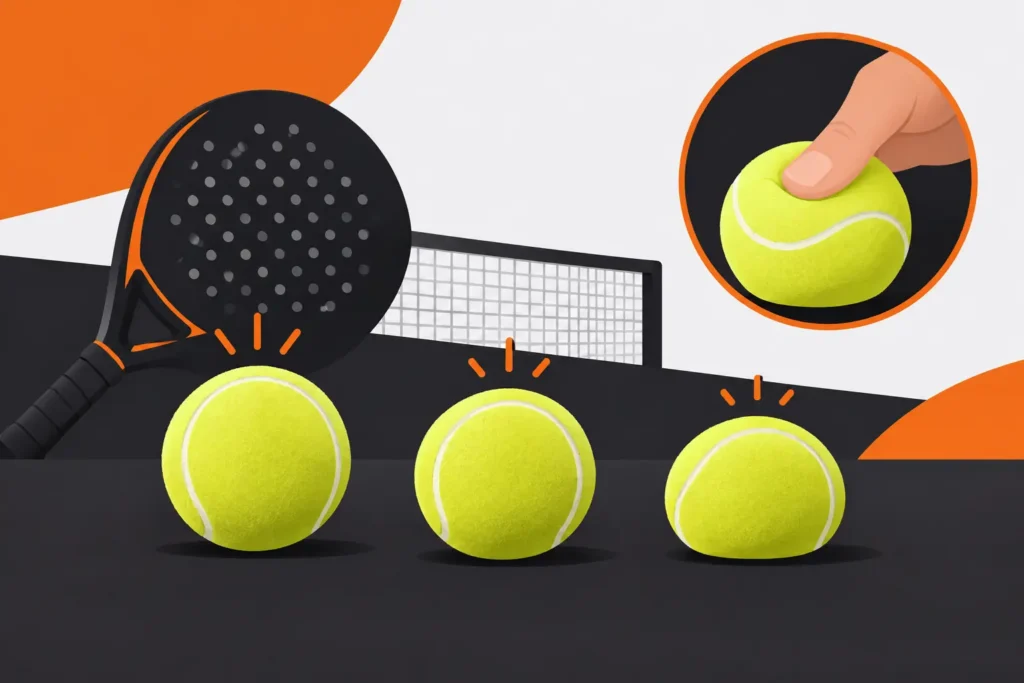
Padel balls are pressurised, and that internal pressure gives them their bounce and pace. A fresh ball has more energy. It comes off the glass more sharply, travels quicker after contact and rewards clean technique. As pressure drops, the ball becomes slower and lower-bouncing.
Fresh, lively balls can suit players who enjoy an attacking game. Volleys move faster, overheads carry more pace and a well-struck vibora or bandeja can do more damage. The trade-off is that quick balls reduce reaction time. If your control is still developing, a very lively ball can make rallies feel rushed.
Softer, lower-pressure balls are usually easier to keep in play. They give you a fraction more time to prepare and can make defensive shots feel more manageable. For beginners, that can be useful while learning positioning, wall play and consistent contact. But if balls are too worn, they stop behaving reliably. You may start hitting harder to create depth, which can encourage poor habits rather than better technique.
Temperature matters too. On a cold British morning, even a newly opened tube can feel slower and heavier. In warm weather, the same ball can feel quicker and bouncier. If a ball feels flat on a chilly court, do not assume the brand is the problem straight away.
Padel balls versus tennis balls
At a glance, padel and tennis balls look almost identical. They are close in size and weight, but they are not interchangeable if you want the game to play as intended. Padel balls generally have lower internal pressure than tennis balls, producing a more controlled bounce and slightly less speed.
Using tennis balls for a casual hit is possible, especially if that is what is available. However, they tend to feel livelier and can make the enclosed padel court play too fast. The ball may rebound more aggressively from the glass, making rallies less predictable and reducing the tactical rhythm that makes padel so enjoyable.
For club matches, coaching sessions and regular play, use proper padel balls. They give you a more consistent reference point as you improve, and they let your racket perform as it was designed to.
Felt changes speed, grip and durability
The yellow felt on the outside is not just there for visibility. It influences the ball’s flight, its grip on the court and how it reacts when it meets the racket, mesh or glass.
A denser, tighter felt often stays tidy for longer and can provide a faster, cleaner feel. A softer felt may offer a touch more grip and a more cushioned response, but it can fluff up sooner. Once the surface wears heavily, the ball may start to fly differently. It can feel slower through the air yet jump unpredictably from the court or walls.
For most recreational players, the practical point is simple: do not judge balls only by whether they still bounce. If the felt is very worn, they may already be affecting your timing and shot quality. Fresh balls make practice more useful because you can trust the response you are getting.
Match balls, training balls and everyday play
Not every session needs a new tube. If you are playing a relaxed game with friends, slightly used balls are a sensible choice. They are calmer, last longer in casual use and cost less over time. They can also help newer players build longer rallies without feeling overwhelmed by pace.
For a competitive match, league fixture or a session focused on attacking shots, open fresh balls. Consistent pressure matters when points are close. Everyone gets the same bounce, the same pace and a fairer test of their reactions.
Coaching sessions are a middle ground. Coaches often use a mix of newer and used balls, depending on the drill. Fresh balls are helpful for practising volleys, overheads and match patterns. Older balls can be perfectly fine for basket drills where the priority is repetition.
If you play once a week, one tube may last a few sessions depending on intensity and surface. If you play several times a week or hit hard, expect to replace balls more often. There is no magic number of matches because pressure loss depends on temperature, impact and storage as much as brand.
How to tell when your padel balls need replacing
A flat-looking ball is an obvious warning sign, but the changes usually appear before that. Notice whether rallies are becoming unusually slow, whether lobs fall short, or whether the ball seems reluctant to come off the glass. If you and your playing partners are all striking harder than usual, the balls may be past their best.
You can also compare a used ball with a fresh one from a new tube. Drop them from the same height onto a hard surface. The older ball will often bounce lower and sound duller. It is not a laboratory test, but it is enough to reveal a meaningful loss of pressure.
Store unopened tubes in a dry place away from strong heat or cold. Do not leave them in a car boot for days, particularly through winter or during a warm spell. Once opened, a pressurised ball saver can help extend their useful life, though it cannot restore badly worn felt or bring a completely dead ball back to match standard.
Which padel ball should you buy?
Start with a recognised padel brand and choose based on how you play rather than chasing technical claims. Beginners and social players usually benefit from a durable, controlled ball that supports longer rallies. Intermediate players may prefer a balanced ball with reliable pressure and a consistent bounce. Advanced players, especially those who like to attack, often choose a faster premium ball for its crisp response when new.
Buying several tubes is usually the practical option if you play regularly. Keep one unopened tube aside for matches, and use older balls for warm-ups or relaxed sessions. That gives you better value without turning every friendly game into an equipment decision.
At 7padel, the simplest approach is to pair quality balls with the type of session you are planning. Fresh balls for the matches that matter, reliable used balls for practice, and a spare tube in your bag so a flat ball never decides the pace of your game.
The best ball is the one that gives your group a consistent, enjoyable rally. Open a fresh tube when you need speed and fairness, keep the older ones for training, and let your shots – not tired equipment – decide the point.