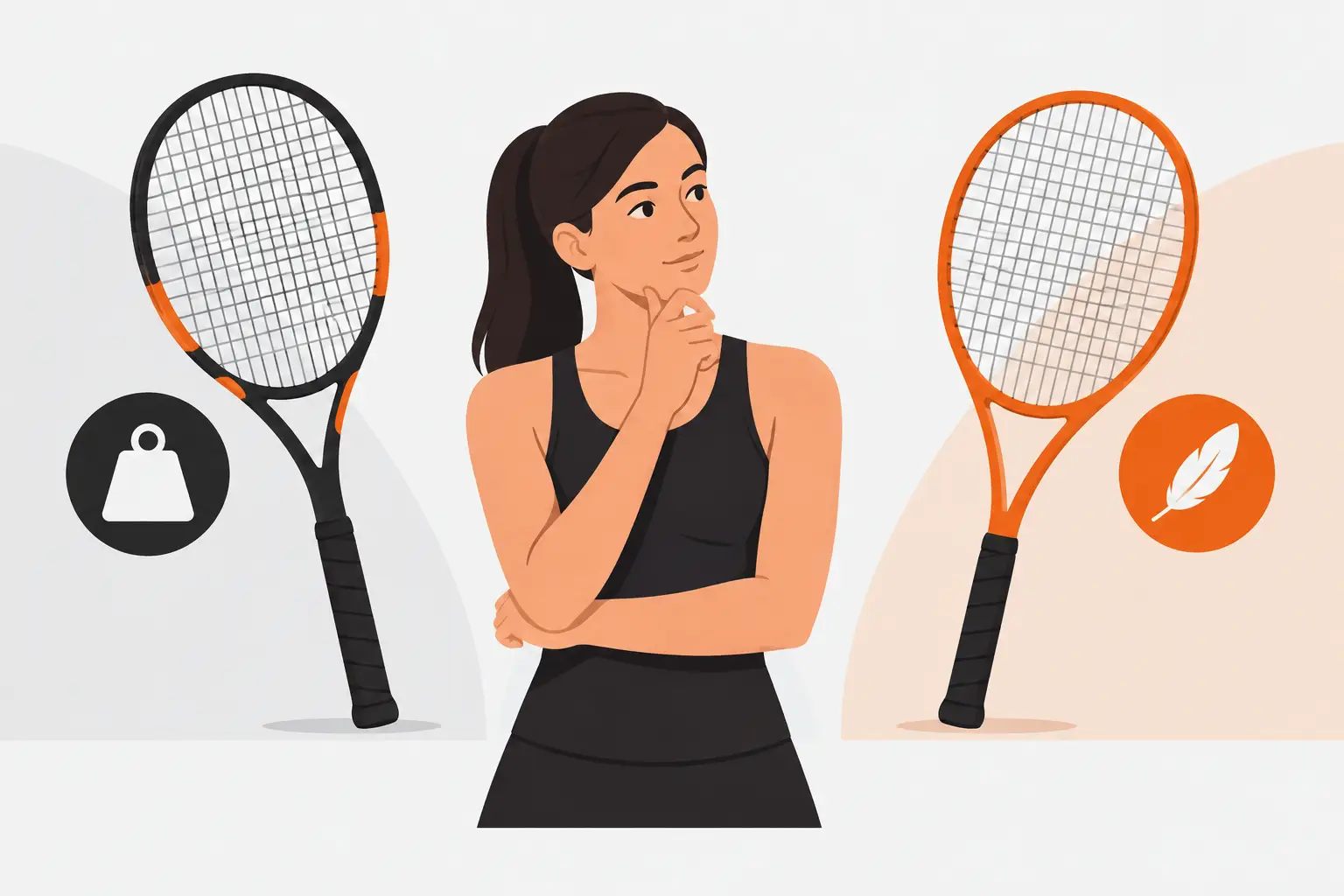
A racket that feels too demanding usually shows up in the second half of a match. Your volleys arrive late, overheads lose their timing, and your arm feels worked long before the final point. Switching to a lighter racket can make padel feel quicker and more comfortable again, but only if you do not sacrifice the stability your game needs.
Weight is one of the first things to consider when choosing a padel racket, especially if you are developing your technique, returning after a break, or simply want faster reactions at the net. The right move is not always to choose the lightest option available. It is to find a weight that helps you play freely while keeping enough presence through the ball.
What counts as a lighter padel racket?
Most adult padel rackets sit roughly between 340 g and 375 g before overgrips and a protector are added. A lighter racket often falls in the 340-355 g range, while a heavier model may sit at 365 g or above. Those numbers look close on paper, but a 10-15 g difference is noticeable over a long session.
Actual feel depends on more than the number on the frame. Balance matters just as much. A 355 g racket with a high balance can still feel slower in the hand than a 365 g racket with a lower, more central balance. High-balance power rackets place more mass towards the head, which adds punch but asks more of your wrist, forearm and shoulder. Lower-balance control rackets tend to feel easier to manoeuvre, even where the listed weight is similar.
That is why players should avoid buying by grams alone. Think about how the racket moves when you block a fast volley, prepare for a bandeja, or react to a ball at your feet.
When switching to a lighter racket makes sense
A lighter racket is often a smart choice when speed and comfort are holding your game back. Beginners can benefit because they have more time to learn clean swing mechanics without fighting excessive weight. It can also suit intermediate players who spend lots of time defending, playing quick exchanges near the net, or making repeated overheads during long matches.
Comfort is another strong reason to change. If your elbow, wrist or shoulder repeatedly feels sore after playing, a lighter and more manageable racket may reduce the load. It is not a medical fix, and ongoing pain deserves proper advice from a health professional, but equipment that feels easier to swing can be part of a sensible adjustment.
Players with a compact swing often enjoy the extra manoeuvrability too. At the net, a lighter racket helps you get the face in position quickly for reflex volleys and defensive blocks. When opponents speed up the game, that fraction of a second matters.
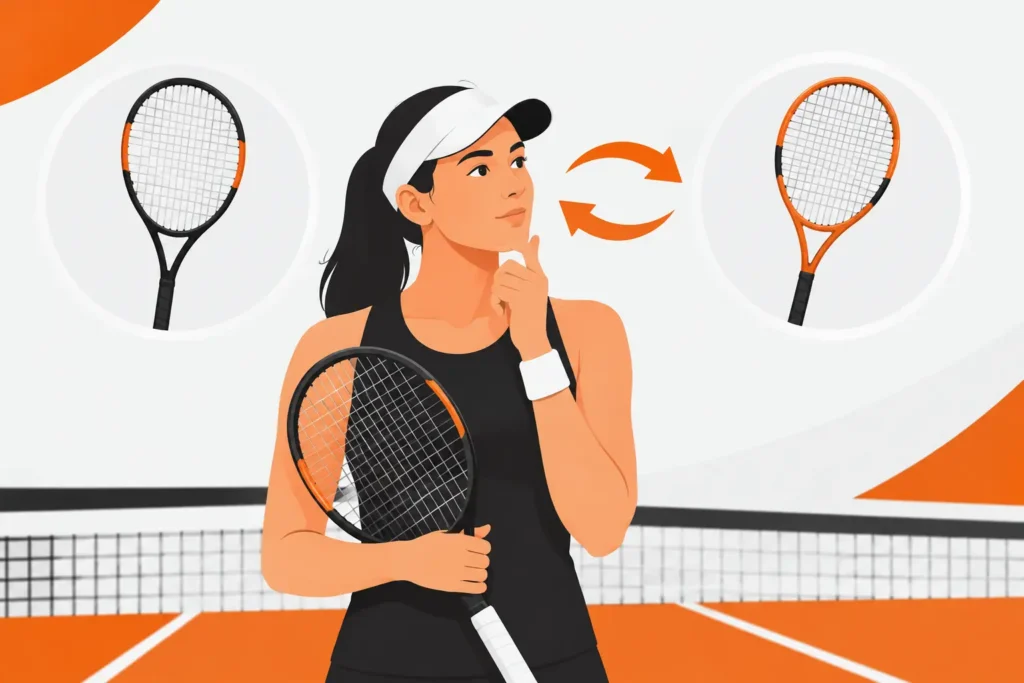
A change can also make sense if you are moving from tennis into padel. Many tennis players initially choose a head-heavy, powerful racket because it looks familiar. Padel rewards fast preparation and controlled touch, so a lighter, round or hybrid racket may help the transition feel more natural.
The benefits you should feel on court
The clearest benefit is faster racket-head speed. You should find it easier to reset after a volley, change direction in quick exchanges and prepare earlier for a vibora or bandeja. Defence can improve because reaching low balls and turning a late block into a controlled return takes less effort.
Lighter rackets can also reduce fatigue. That does not mean you will suddenly play every shot better, but your technique is less likely to fall apart when the match becomes physical. For social players who play once or twice a week, this can make sessions more enjoyable rather than leaving you with a tired arm for days.
There is a confidence benefit as well. If you hesitate before an overhead because your current racket feels slow, you are unlikely to commit to the shot. A more agile frame encourages you to swing with better rhythm. For many players, clean contact improves before raw power does.
What you may give up
Less weight can mean less stability when you meet a hard ball. Against strong hitters, an ultra-light racket may twist slightly on off-centre contact, particularly if it has a high balance or a small sweet spot. Your blocks may feel less solid, and deep defensive lobs can require more active work from your arm.
Power is the other trade-off. A heavier racket carries more momentum through the ball, so players who rely on aggressive smashes may find a very light model lacks their usual finish. This is especially relevant for advanced players with sound technique and a fast swing. They may benefit more from a balanced 360-365 g hybrid than a frame at the lowest end of the weight range.
The answer is not to avoid lighter rackets. It is to match the racket to your level and style. A player who wins points through placement, quick hands and consistency needs something different from a player who attacks every short lob.
Choose weight with your playing style in mind
For beginners, a light-to-medium racket with a round shape and low or medium balance is usually the safe starting point. It offers a generous sweet spot, easier handling and enough control to build confidence. Look for comfort and forgiveness before chasing power.
Intermediate players have more room to choose based on their strengths. If you enjoy defending, constructing points and moving quickly at the net, a 350-365 g control or hybrid racket can work well. If you play on the left and like to attack, you may still prefer a slightly firmer hybrid design, but there is no need to jump straight to a heavy diamond shape.
Advanced players should focus on the full specification rather than a single weight figure. A powerful player with no arm issues may value a heavier, head-biased frame. An advanced all-rounder, however, may play better with a lighter option that preserves speed during quick transitions. The best racket is the one that supports your repeatable shots, not the one that feels most impressive in the first five minutes.
Do not forget grips, protectors and balance
Your racket rarely stays at its factory weight. One or two overgrips add weight to the handle and can make the balance feel lower, often improving control and comfort. A frame protector adds weight around the head, which can make the racket feel more powerful but slower to manoeuvre.
This gives you a useful option before replacing your racket. If your current frame is only slightly too head-heavy, adding an overgrip may improve the feel. If it is clearly too heavy and tiring, however, small adjustments will not transform it into a comfortable choice. In that case, switching rackets is the more practical answer.
When comparing models, remember that manufacturers commonly give a weight range rather than one exact figure. If you are particularly sensitive to weight, ask for the lightest available unit within that range where possible. A few grams can make a real difference when you play regularly.
Make the switch without overcorrecting
Do not move from a 375 g racket to the lightest 340 g frame simply because your current model feels demanding. Start by reducing weight gradually, usually by 5-10 g, while choosing a lower or more central balance if manoeuvrability is your main goal. This keeps the transition natural and helps you retain solid contact.
Give yourself several sessions to judge the change. A lighter racket may initially feel less powerful because you are used to letting the old frame do more of the work. Focus on preparing early, using your legs and meeting the ball in front. If your timing improves and your arm feels fresher without your shots becoming flimsy, you are probably moving in the right direction.
At 7padel, sorting rackets by playing level and control, hybrid or power style makes this decision simpler. Start with the way you actually play, then use weight and balance to narrow the choice.
A lighter racket should not make your game feel smaller. It should make your reactions sharper, your swing easier to trust and your next match more enjoyable from the first volley to the last.