A racket that feels slightly off in your hand can ruin more than a few shots. If the grip is too small, you tend to squeeze too hard. If it is too big, quick changes in hand position feel awkward. That is why learning how to choose racket grip size matters – not as a minor detail, but as part of playing comfortably and confidently.
In padel, grip size does not get talked about as much as racket shape, balance or weight. Still, it affects all three in a practical way. Your hand is the connection point between you and the racket, so if that connection feels wrong, everything else feels harder than it should.
How to choose racket grip size for padel
The first thing to know is that padel works a bit differently from tennis. Many padel rackets come with a fairly standard handle size, and players adjust the final feel with overgrips. That means you usually are not choosing from a long list of fixed grip sizes in the same way you might with some tennis rackets. Instead, you are working out whether the base grip feels right and whether adding one or two overgrips gives you the best fit.
For most adult players, the goal is simple. You want a grip that sits securely in the hand without forcing you to clamp down too tightly. It should feel stable on volleys and bandejas, but still let you move the racket quickly at the net and on defensive shots.
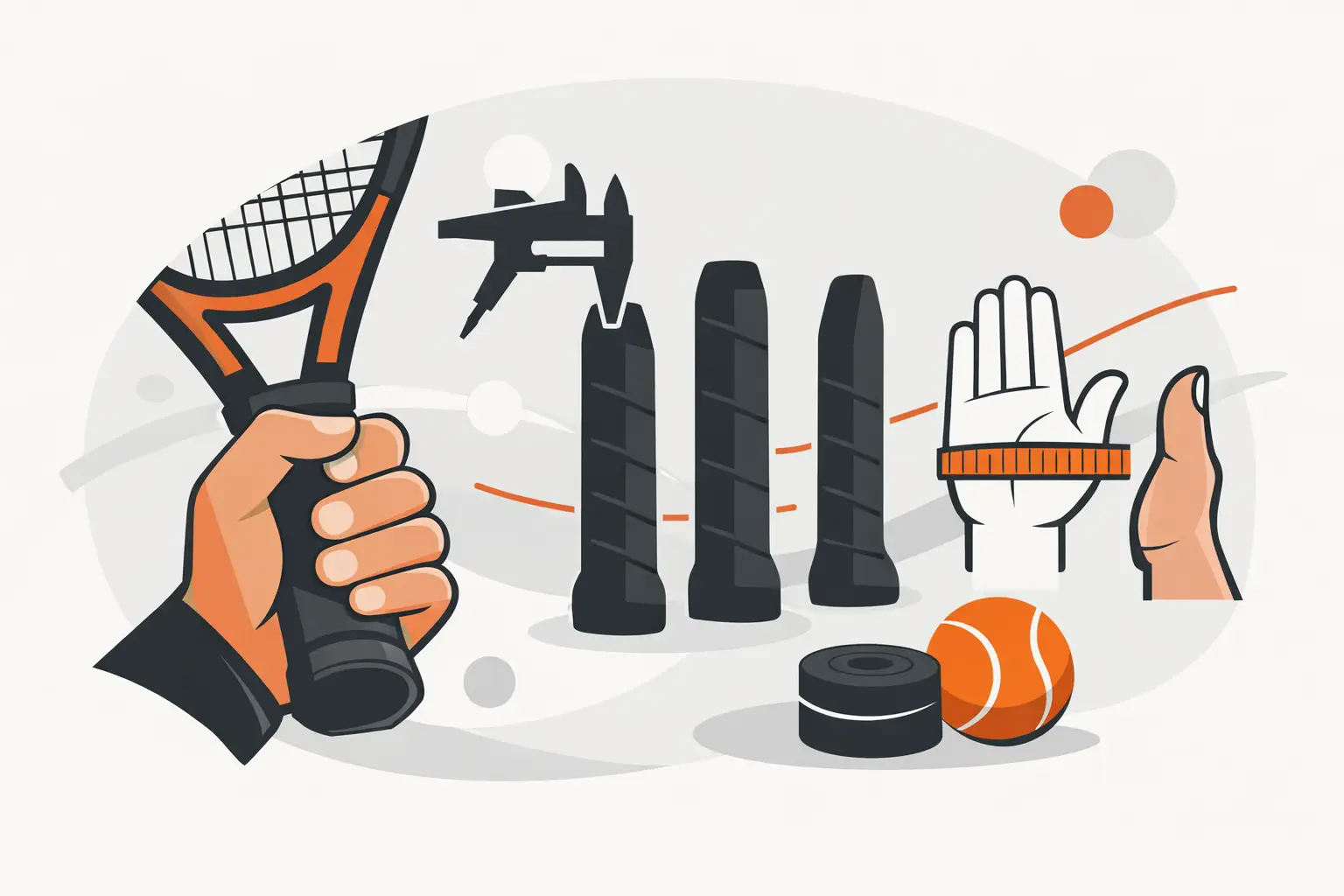
A useful starting point is the finger test. Hold the racket with your usual playing grip. There should be a small gap between your fingertips and the base of your thumb. If there is no room at all, the grip is probably too small. If there is a large gap, it is probably too big. You are not looking for perfection to the millimetre, just a natural, controlled feel.
Another easy check is how your hand behaves during play. If the racket twists on contact and you constantly feel the need to tighten your grip, it may be too small. If your wrist feels restricted and changing grip for different shots feels slow, it may be too big.
Why the right grip size changes your game
Grip size affects comfort first, but the knock-on effect on performance is hard to ignore. With the right size, you can hold the racket firmly without excess tension. That helps with touch shots, reaction volleys and overall control.
If the grip is too small, many players overcompensate by gripping harder. That can make your forearm tire more quickly and reduce feel on delicate shots. It can also contribute to discomfort over time, especially if you play often.
If the grip is too large, the racket can feel less responsive. You may struggle to generate quick wrist action, and your hand position can feel fixed rather than adaptable. In padel, where fast exchanges and compact swings matter, that lack of freedom is a real drawback.
This is where there is a bit of trade-off. Some players like a slightly smaller grip because it feels more manoeuvrable and easier to customise with overgrips. Others prefer a fuller feel for added stability. Neither approach is automatically wrong. The best choice depends on your hand size, how much cushioning you like, and how you play.
Beginners usually benefit from a safer, more comfortable fit
If you are newer to padel, comfort should come before fine margins. A grip that feels secure and slightly cushioned is usually better than one that feels very thin and technical. Beginners often grip too tightly anyway, especially under pressure, so a setup that encourages a more relaxed hold is a smart move.
That often means starting with the standard handle and adding an overgrip if needed. It is a simple, low-risk way to improve fit without overthinking the details.
Intermediate and advanced players may prefer more precise customisation
Once you have a clearer playing style, grip preference gets more personal. A control-focused player may want a very dependable hand feel for blocks, lobs and placement. A more aggressive player might prefer something slightly slimmer for faster hand speed and easier adjustment during quick exchanges.
At this level, small changes can make a noticeable difference. Even one extra overgrip can shift the feel from sharp and direct to more stable and cushioned.
The easiest way to adjust grip size
In padel, overgrips are the simplest answer. If the handle feels a touch small, adding one overgrip is usually enough to improve comfort. Add a second if needed, but do not keep layering grips without testing the result. Too many overgrips can make the handle feel bulky and reduce feel.
There is also a balance between thickness and texture. Some overgrips are tackier, while others feel drier or more padded. If your issue is slipping, you may not need a bigger grip at all – you may just need a different overgrip surface. If your hand feels cramped, thickness is more likely the answer.
This matters because players sometimes misdiagnose the problem. They think the racket is wrong, when actually the handle just needs a small adjustment.
How to choose racket grip size without guessing
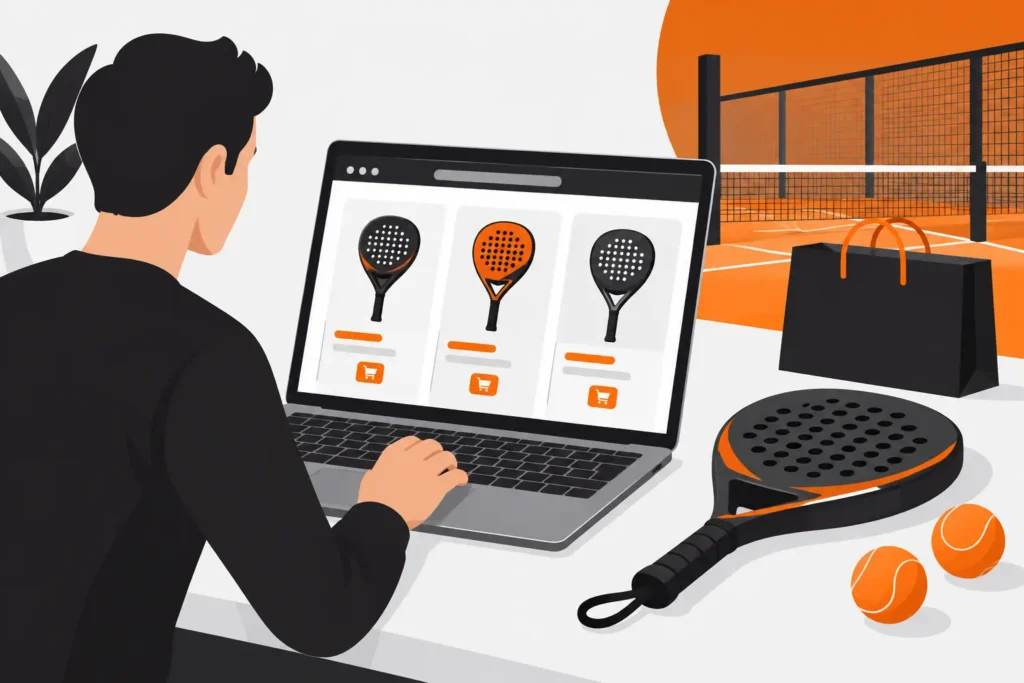
If you are shopping online, you cannot always hold the racket before buying. That makes a practical approach even more important.
Start with your current racket, if you have one. Ask yourself a few honest questions. Does your hand feel tired after matches? Do you feel in control at the net? Have you already added overgrips, and did that improve things or make the handle feel too thick? Your current setup tells you more than any chart if you pay attention to how it performs in real play.
Then think about your playing style. If you rely on quick reactions, hand speed and touch, a slightly slimmer finished grip may suit you. If you want more comfort and a solid, planted feel, a slightly thicker finished grip may be better. Again, there is no universal answer, only a better fit for your game.
It also helps to keep your level in mind. Newer players usually do best with a forgiving setup that feels secure from day one. More experienced players can be fussier because they notice small changes more clearly.
Signs your grip may be too small
A too-small grip often shows up through tension and instability. You may notice the racket moving in your hand on off-centre contact. You may grip harder on volleys or smashes just to feel in control. After longer sessions, your hand or forearm may feel unusually tired.
Signs your grip may be too big
A too-large grip often feels clumsy rather than unstable. You might struggle to change hand position naturally. Wrist action can feel restricted, and fast exchanges may seem slower than they should. Some players also feel they lose touch on softer shots because the handle fills the hand too much.
Do brands and racket types change the answer?
Sometimes, yes. Handle shapes and base grip builds can vary a bit between brands and models. One racket may feel slimmer or squarer in the hand than another, even if the difference on paper seems small. That is why brand familiarity helps. If you already know a certain brand feels right in your hand, that can narrow your search.
Racket type also plays a part. A power racket with a higher balance can already feel more demanding, so an uncomfortable grip only makes that worse. A control racket may feel easier to manage overall, but it still will not perform well if the handle setup is wrong. Grip size is not separate from racket choice – it supports it.
For players comparing options online, this is where practical buying guidance matters. The best setup is not the one with the most technical claims. It is the one that matches your level, your style and the way the racket actually feels in your hand.
A smart approach before you buy
If you are between two feelings, go slightly smaller and build up with overgrips. That gives you more flexibility than starting too thick. It is easier to add than subtract.
Just do not chase perfection on day one. Your ideal grip size is the one that lets you play freely, stay comfortable and trust your racket under pressure. That is what helps you shop smart and play better.
When the grip feels right, the whole racket starts to make more sense. Your shots feel cleaner, your hand stays calmer, and choosing the rest of your gear becomes a lot easier.