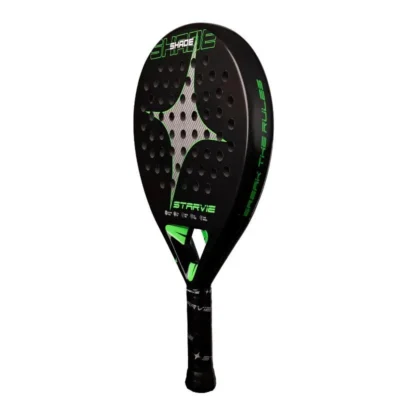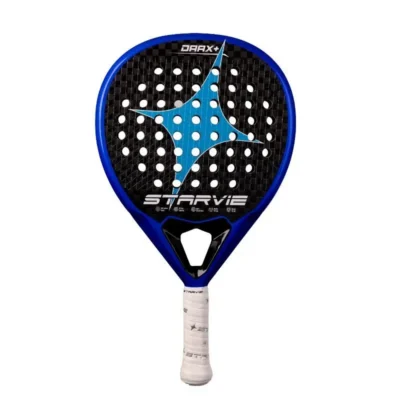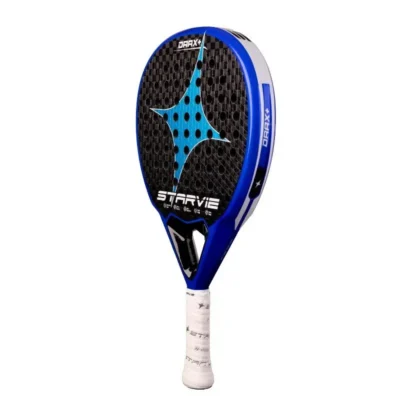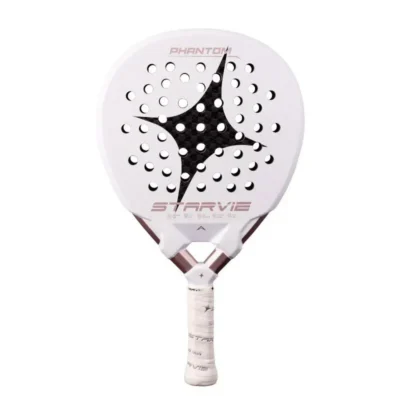
The easiest volley to miss is often the one that looks easy. You arrive at the net early, the ball sits up, then you take a big swing and send it into the mesh or long off the glass. Improving volleys with a control racket is about removing that uncertainty: a more stable, predictable racket helps you block, guide and place the ball without forcing the shot.
A control racket will not fix late footwork or a loose grip on its own. What it can do is give you clearer feedback and a larger margin for error, especially when the point speeds up at the net. Pair it with compact technique and you will start winning more of the exchanges that decide padel matches.
Why control matters at the net
At the net, there is rarely time for a full backswing. Good volleys are built on preparation, balance and a short movement through the ball. The goal is not to hit the cover off it. It is to take away time from your opponents while keeping the ball low and difficult to attack.
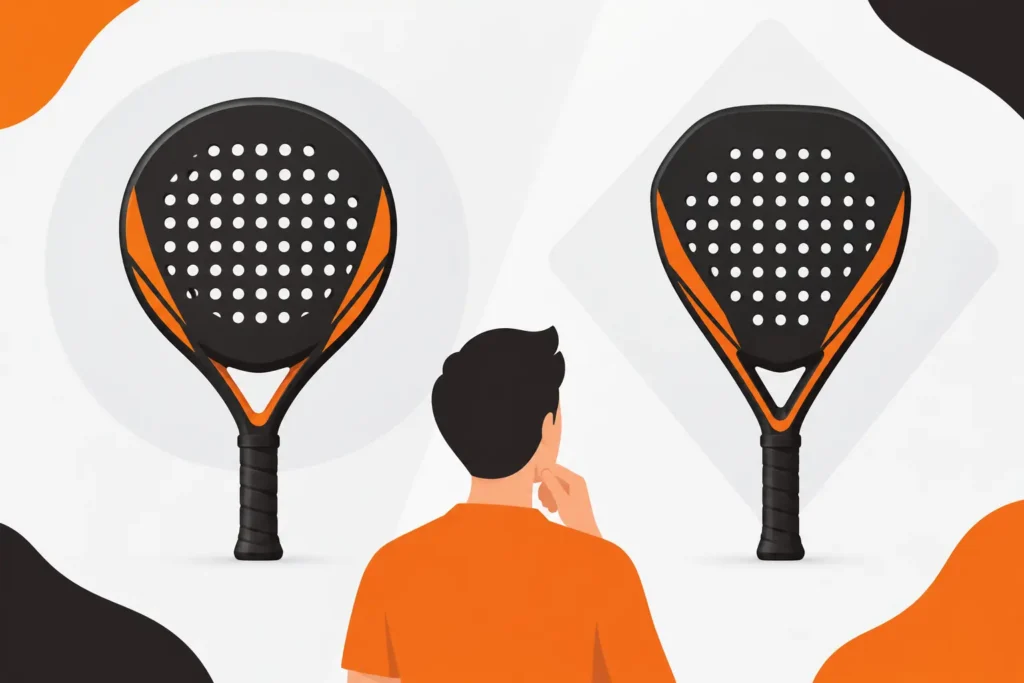
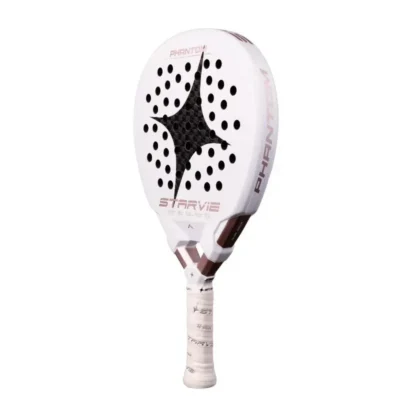
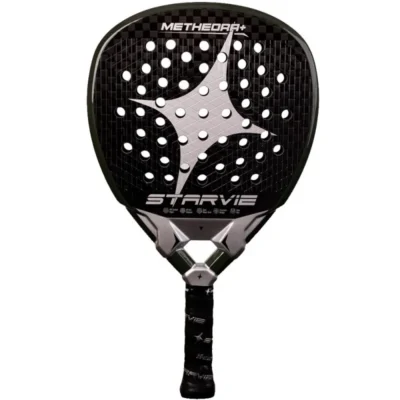
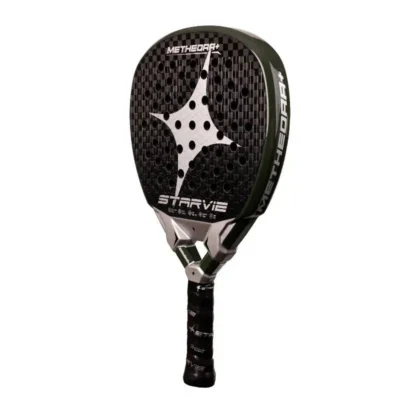
A control-focused racket is usually round or close to round in shape, with a centred sweet spot. It often has a lower balance than a power model, so it feels easier to manoeuvre when reacting to fast balls. That makes a real difference when you are switching quickly between forehand and backhand volleys, defending a body shot or playing a soft angle near the side wall.
The trade-off is simple. You may not get the same effortless punch on an overhead as you would from a high-balance diamond racket. But for many beginner and intermediate players, cleaner contact and better direction create more useful pace than a racket that encourages hard, inconsistent swings.
Improving volleys with a control racket
Start by treating the racket as a guide, not a hammer. Hold it in front of your body with the head around chest height and the face slightly open. From here, your movement should be small: turn the shoulders, step towards the ball and meet it in front.
On the forehand volley, avoid taking the racket behind your hip. Make a compact shoulder turn, keep the wrist firm and push gently through the ball. Think of sending it to a target rather than striking it with maximum force. A clean, short volley down the middle often causes more problems than a flashy winner attempted from a poor position.
The backhand volley needs the same discipline. Players commonly drop the racket head or flick the wrist, especially when rushed. Instead, prepare early with both hands on the racket, turn your upper body and let the forward step support the shot. Keep the racket face stable through contact. If the ball is below net height, prioritise depth and safety over a tight angle.
A control racket rewards this approach because its manoeuvrability makes it easier to present a square racket face. You still need to move your feet, but you are less likely to feel the head lag behind when the pace rises.
Choose height before direction
Your best volley changes with the height of the ball. Above net height, you can play more aggressively: aim low at an opponent’s feet, use the centre gap, or angle the ball towards the side wall. At net height, play with controlled depth and avoid giving opponents an easy counterattack.
Below net height, simplify. Lift the ball with a gentle, firm push towards the back half of the court. Trying to force a winner from this position is one of the fastest ways to lose the net. A control racket helps you absorb incoming pace, but it does not make low balls magically attackable.
Let the ball come to you
Many missed volleys happen because the player reaches. When you stretch sideways and hit outside your body line, the racket face tends to open or close at the last moment. Take small adjustment steps until the contact point is comfortably in front of your leading foot.
This is particularly important on fast volleys exchanged between two net pairs. Stay light on the balls of your feet, use a split step as your opponent strikes the ball, and keep your non-playing hand up for balance. The racket should already be in a neutral ready position, not hanging by your thigh.
Use grip pressure to control pace
A continental grip is the most versatile starting point for padel volleys. It allows you to play forehand and backhand shots without major grip changes and gives you access to slices, blocks and quick reactions.
Grip pressure matters as much as grip choice. Hold the handle firmly enough that the racket does not twist at contact, but do not squeeze it from the start of the point. A tense hand slows your reactions and makes touch volleys feel harsh. Keep the hand relaxed while waiting, then tighten slightly through the moment of impact.
When facing a hard drive, absorb some of the ball’s energy with a short block rather than adding your own swing. When the ball is slower and higher, add a little forward movement from the shoulder and step. This ability to vary pace is where a control racket earns its place. It gives you the confidence to play the percentage shot rather than swinging harder because you do not trust the contact.
Drills that make your volleys more reliable
You do not need an elaborate session to improve. Ten focused minutes at the start of practice can make your net game noticeably steadier.
First, stand close to the net with a partner and exchange gentle forehand and backhand volleys. Keep both players focused on 20 consecutive balls rather than winning the rally. This quickly exposes a large backswing, poor ready position or unreliable racket face.
Next, move back to normal net positions and play cooperative volleys only through the middle. The middle target reduces risky angles and teaches you to control height and depth. Once that feels comfortable, alternate one volley down the middle and one towards the side wall.
For a more match-like drill, ask your partner to feed balls at different heights and speeds. Your job is to call the choice before contact: “attack”, “neutral” or “defend”. This builds the decision-making that separates a solid volley from an unforced error. The correct shot is not always the most aggressive one.
Finally, practise the body volley. Have your partner direct balls towards your hips and shoulders while you block them back with minimal movement. A manoeuvrable control racket is particularly useful here, but your elbows must stay in front of your body. If they drift behind you, the ball will jam you.
Choosing a racket for better volley control
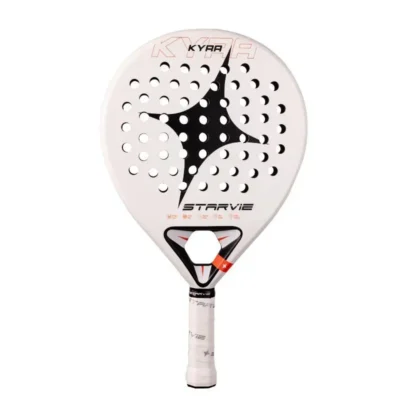
Racket type should support your current game, not the player you hope to become next month. If you are learning to hold the net, a round control racket with a generous sweet spot is usually the sensible choice. It offers easier handling, useful forgiveness and confidence on defensive blocks as well as volleys.
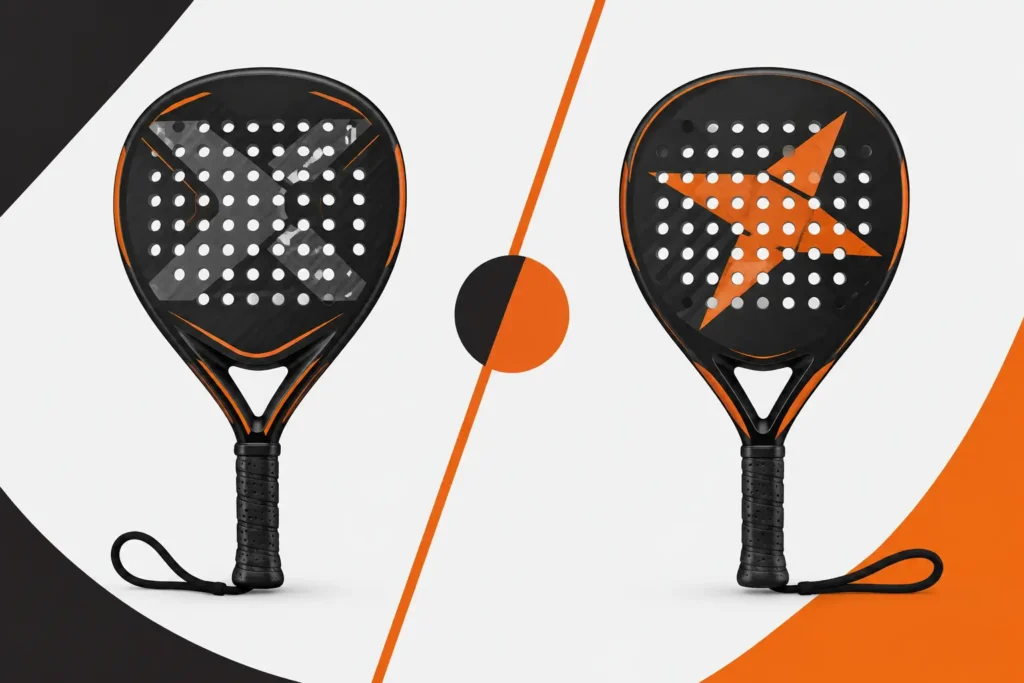
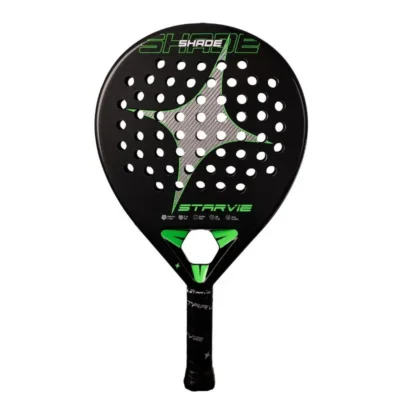
Intermediate players who already strike cleanly may prefer a hybrid shape. These rackets retain much of the control of a round model while adding a little more punch for volleys and overheads. They can be a strong option if you want to attack more without moving straight to a demanding power racket.
Weight also changes the feel. A lighter racket can be faster in hand and easier on the arm, while a heavier model may feel more stable when returning pace. There is no universal best weight. If you often arrive late to quick exchanges, choose manoeuvrability. If your racket gets pushed around on contact despite sound technique, a little extra weight may help.
Face material affects touch too. Softer faces can feel comfortable and help the ball leave the racket easily, while firmer faces offer a crisper response for players who generate their own pace. The best fit depends on your swing speed, comfort and how much feedback you like at impact.
At 7padel, filtering rackets by control, hybrid and playing level makes this decision simpler. Start with the category that matches your real needs, then compare shape, balance and weight rather than choosing only by the racket used by your favourite professional.
Keep the net position you have earned
A good volley is often the shot that keeps opponents under pressure without giving them a counterattack. Aim for consistency first, use height intelligently and keep your preparation compact. With a control racket that suits your hand and level, those difficult quick exchanges become less frantic and far more playable.
The next time a floating ball arrives at the net, resist the urge to swing bigger. Set your feet, meet it early and place it with purpose. That is how control turns into points.