A racket can look perfect on paper, then feel slow in your hand during the first fast exchange at the net. Before choosing your next padel racket, learn how to measure racket balance. It is a simple home test that tells you where the racket’s weight sits – and gives you a much clearer idea of how it will play.
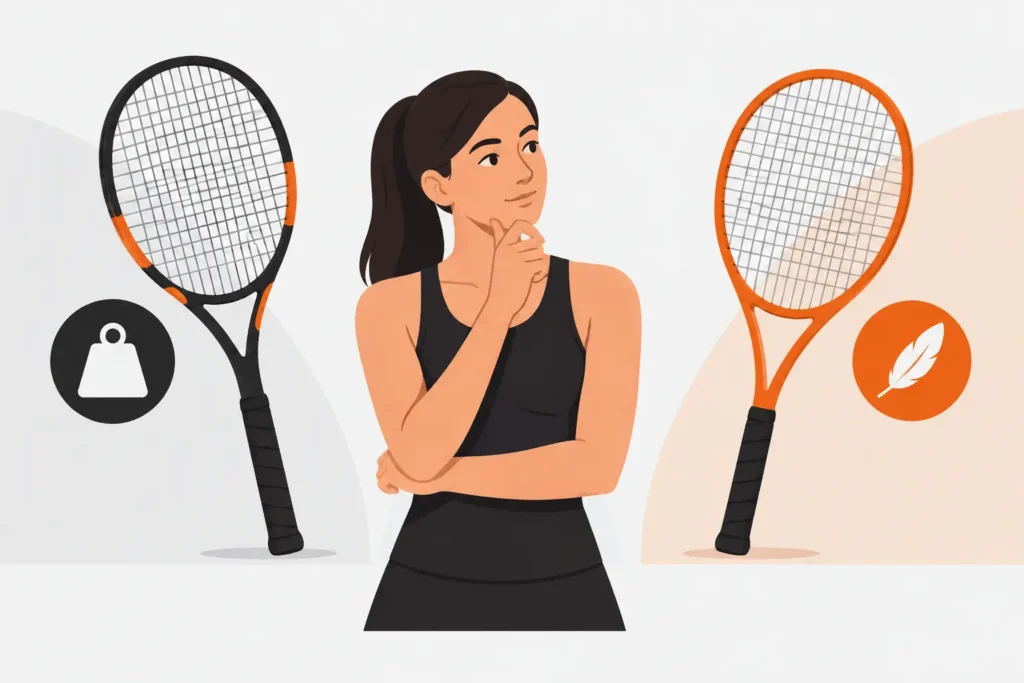
Balance is not about whether a racket is heavy or light overall. A 360g racket can feel quick and controlled if most of its weight is near the handle, while another racket at the same weight may feel more powerful but harder to move if the weight sits towards the head. That difference matters on every volley, bandeja and overhead.
What racket balance means in padel
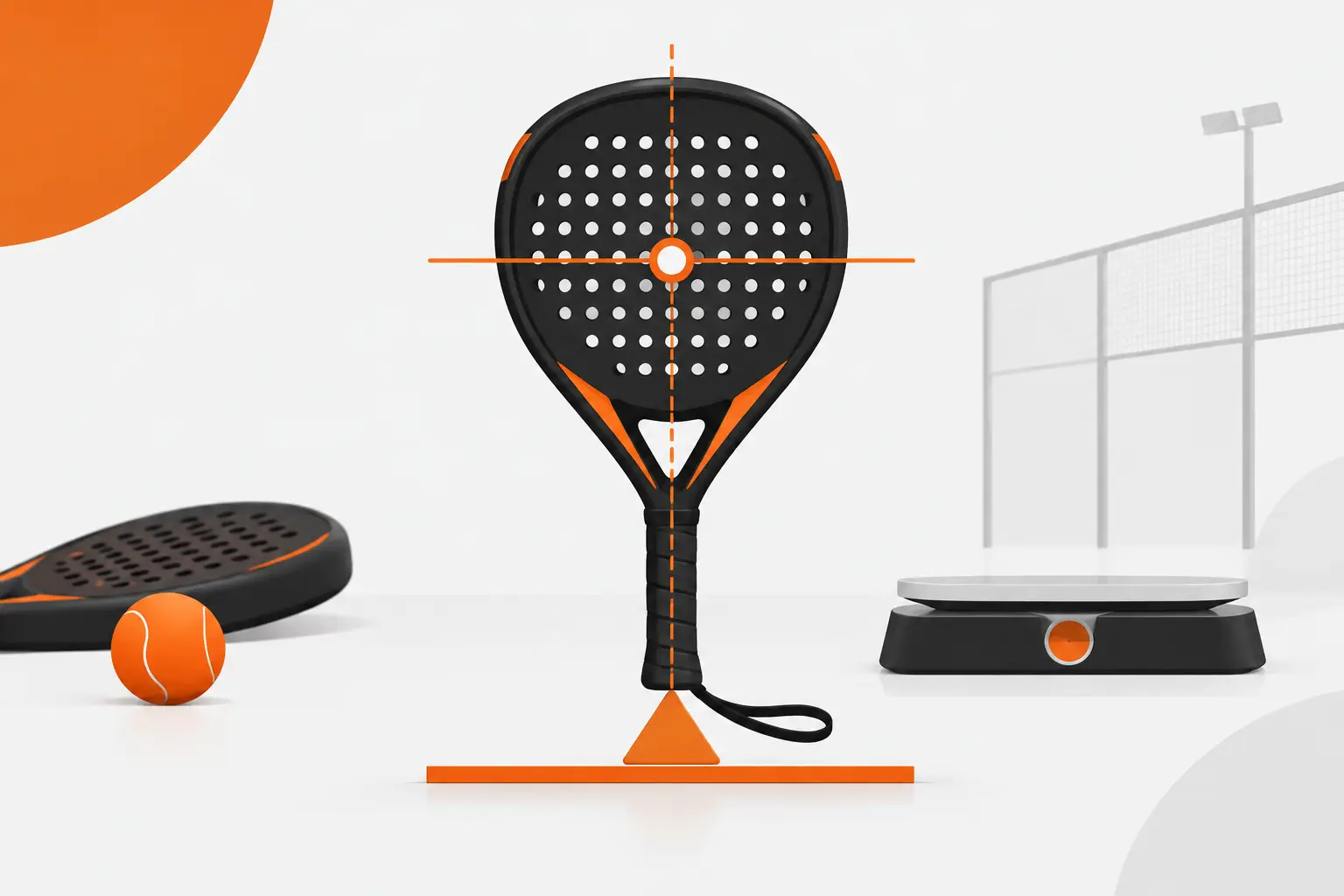
Racket balance is the point where your racket stays level when supported underneath. It is measured from the base of the handle, usually in millimetres. The farther this point is from the handle, the more head-heavy the racket is.
Manufacturers may describe a racket as low, medium or high balance. These labels are useful, but they are not always measured or presented in exactly the same way from one brand to another. Measuring your own racket gives you a practical reference point, especially when comparing models from Adidas, Babolat, Bullpadel, Head, Nox, Starvie or Wilson.
A balance figure does not tell the whole story. Racket shape, total weight, frame construction and foam also affect feel. Still, balance is one of the quickest ways to understand why one racket feels easy to manoeuvre and another feels built for heavier attacking shots.
How to measure racket balance at home
You do not need a specialist machine. A ruler and a stable narrow edge are enough. Use a long, rigid ruler where possible, as a soft tape measure can shift and make the result less reliable.
Place the ruler on a flat table with the zero mark at the edge. Rest the racket across a narrow support, such as the edge of the ruler, a straight pen or a small dowel. Move the support slowly along the length of the racket until it balances without tipping towards the handle or head.
When the racket stays level, mark or note the point directly beneath it. Measure from the very bottom of the butt cap to that point. The number you get, in millimetres, is the balance point.
For example, if your racket balances 265mm from the butt cap, its balance is 265mm. Repeat the test two or three times. If your readings are within a few millimetres, you have a dependable result.
Measure it in the condition you play with
This is where many players get misleading results. An overgrip, wrist strap, frame protector and damp accessories all add weight. If you want to know how the racket feels on court, measure it with your normal playing setup fitted.
If you are comparing your result with a manufacturer specification, remember that the published figure may have been measured without an overgrip or protector. A fresh overgrip adds weight close to the hand, which can make the balance slightly lower. A heavy protector placed high on the frame can shift the balance upwards.
Neither approach is wrong. Just be consistent. Measure every racket in the same condition if you want a fair comparison.
How to read your racket balance result
Most adult padel rackets are around 45.5cm long, and balance points commonly sit somewhere in the mid-200mm range. The exact number matters less than what it means for your playing style.
Low balance: quicker handling and more control
A low-balance racket carries more of its mass towards the handle. It generally feels faster to position at the net and less demanding during long matches. This is often a smart choice for beginners, players who value control, and anyone who wants help defending quickly off the glass.
Low balance can also suit players with elbow or shoulder sensitivity because the head feels less demanding to accelerate. It does not mean the racket has no power. Good technique still creates pace, but you may need to work a little more for your biggest smashes.
Medium balance: the all-round option
Medium balance sits between easy handling and extra punch. It is popular because it does not strongly push your game towards either control or power. For many intermediate players, this is the easiest category to trust while developing a more complete game.
A hybrid-shaped racket often uses medium balance, though shape alone does not guarantee it. If you play from both sides of the court, defend regularly and still want enough weight behind your volleys, a medium-balance model is usually worth shortlisting.
High balance: more momentum for attacking shots
A high-balance racket puts more mass towards the top of the frame. That creates greater momentum through overheads, viboras and aggressive volleys. Advanced attacking players often enjoy the heavier feel through the ball, particularly when finishing points above shoulder height.
The trade-off is manoeuvrability. A head-heavy racket can feel slower in quick hand battles and more tiring when your timing is not sharp. It may be the wrong choice for a newer player simply because it promises power. If you are late to the ball, more head weight rarely fixes the problem.
Balance point versus total racket weight
Never judge balance in isolation. A 350g high-balance racket and a 375g high-balance racket may both be labelled head-heavy, but the heavier one will usually demand more strength and place more load on the arm.
Likewise, a heavier low-balance racket may still feel very manageable because the mass stays closer to your hand. This is why two rackets with the same balance point can feel different in a match. Their total weight, head shape and material response all change the experience.
When shopping, start with your preferred feel rather than chasing one perfect number. A player who likes quick reactions and consistent placement should prioritise low-to-medium balance. A player with solid technique who builds points for overhead finishes may prefer medium-to-high balance. Your level, fitness and style all count.
Why the measured number can differ from the product page
Small differences are normal. Padel rackets are made within production tolerances, so two units of the same model can vary slightly in weight and balance. One may balance at 262mm and another at 267mm, even before you add your grip and protector.
The testing method also matters. If the racket is not perfectly level, if the support is too wide, or if you start measuring from above rather than below the butt cap, the result can move by several millimetres. Keep the racket horizontal and use the same reference point every time.
Do not worry about tiny variations. A difference of two or three millimetres is unlikely to transform how the racket plays. A change of 10mm, combined with a noticeable weight difference, is more likely to be felt on court.
Can you change a padel racket’s balance?
Yes, but changes should be small and deliberate. Adding an overgrip is the simplest way to make a racket feel slightly more handle-friendly. It is a useful adjustment if you like the racket’s touch but want quicker preparation at the net.
Adding a protector or lead tape near the top of the frame shifts weight towards the head and can add more punch. However, it also makes the racket less agile and may increase strain if you are not used to the extra load. Make one change at a time, then play a few sessions before adding more.
For most players, it is better to buy a racket whose natural balance already suits their game. Adjustments can refine the feel, but they should not be used to force an unsuitable racket into becoming something else.
Use balance to shop smarter
If your current racket feels slow on defensive blocks or awkward in rapid volleys, measure it before replacing it. You may find that its balance is higher than you realised. If it feels unstable through your overheads or lacks weight behind the ball, a slightly higher balance could be the missing piece.
Write down the balance point, total weight and your honest on-court impression after a few matches. That small set of notes makes your next choice far easier than relying on a marketing label alone. At 7padel, the aim is simple: match the racket to the way you actually play, so you can shop smart and enjoy every point more.