A padel ball can look perfectly usable between points yet feel completely different when the rally starts. If serves stop jumping, volleys feel flat or you are having to hit harder for normal depth, it is probably time to ask when to replace padel balls. Fresh balls do not make your technique perfect, but they do give you the predictable bounce and pace needed to play your best.
Unlike a racket, balls are a regular running cost of the game. The right replacement schedule depends on how often you play, the court conditions and the level of match you are playing. The goal is not to open a new tube for every casual hit. It is to recognise when worn balls are affecting the quality of your session.
Why padel balls lose their performance
Padel balls are pressurised. Their lively bounce comes from air pressure inside the rubber core, while the felt covering helps them grip the court and racket face. Every impact slowly reduces that internal pressure. Heat, cold and poor storage can speed up the process.
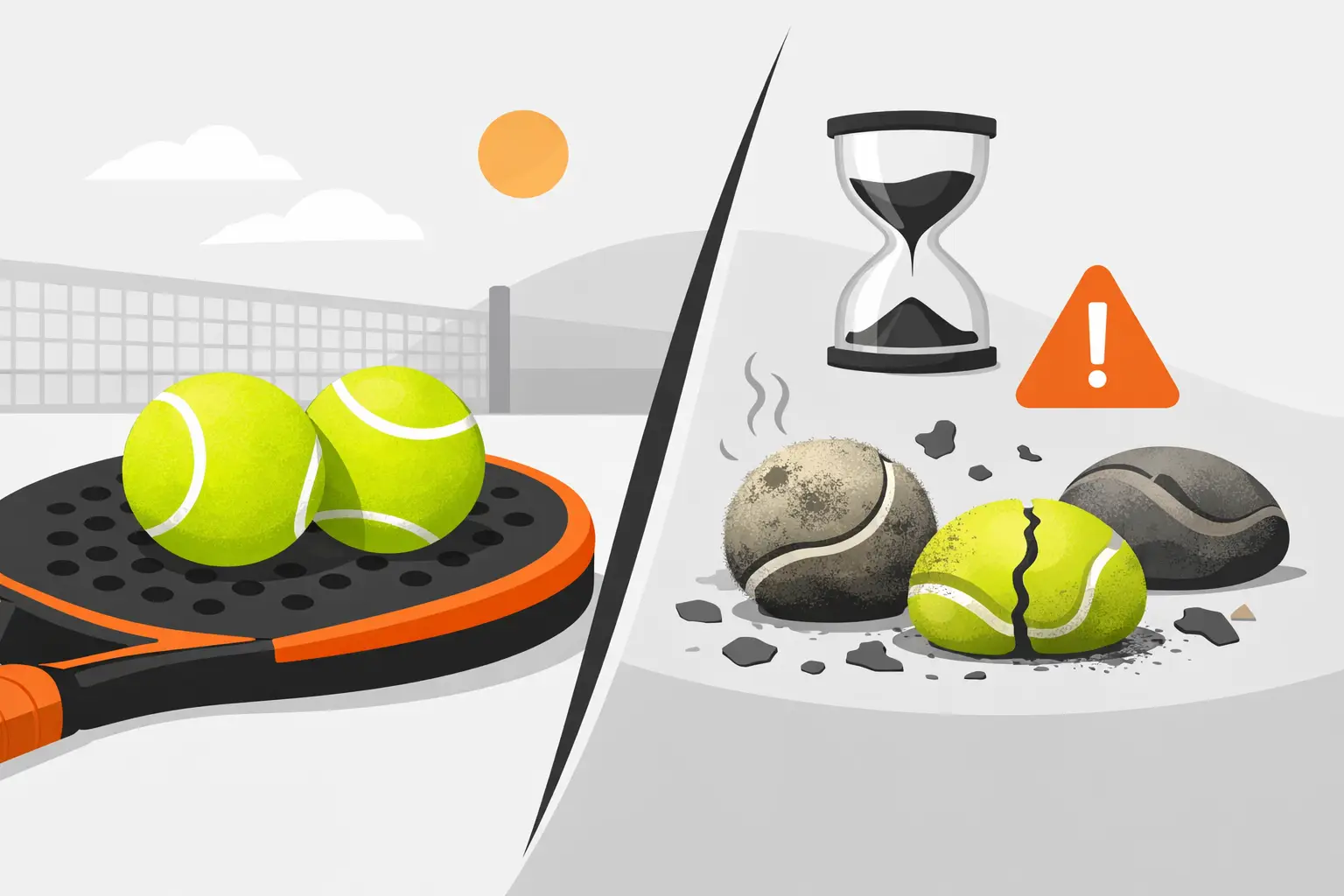
As pressure drops, the ball becomes softer and slower. It may still rally, but it will not react in the same way off the glass, fence or court surface. Players often compensate by swinging harder, which can make timing less accurate and put unnecessary strain on the arm and shoulder.
The felt also wears down. A heavily fluffed or bald ball flies less cleanly through the air and may pick up moisture or dirt more easily. Pressure is usually the main reason to change balls, but worn felt is another good reason not to keep using the same tube indefinitely.
When to replace padel balls for your playing routine
There is no single number that works for every player. A social player having one relaxed session a week can get more use from a tube than a competitive pair training several times a week. As a practical rule, use the signs below alongside your own experience on court.
1. The bounce is noticeably lower
The clearest sign is a flat bounce. Drop a ball from around shoulder height onto a hard, level surface and compare it with a fresh one if you have one available. A used ball that sits much lower has lost pressure.
You will notice the same thing during play. Short balls die early, defensive lobs do not carry as well and balls coming off the back glass feel less lively. When the bounce becomes inconsistent, replacement is the sensible call.
2. You need more effort for normal shots
A soft ball asks you to work harder for pace and length. If your usual volley no longer reaches the opponent with enough penetration, or your bandeja feels unusually slow despite clean contact, check the balls before changing your technique.
This matters particularly for beginners and intermediate players. Practising with dead balls can make it harder to judge depth and develop a relaxed swing. Fresh, consistent balls give more useful feedback on every shot.
3. The balls feel different from one another
A tube does not always wear evenly. One ball may be clearly softer than the other two after a long session or two. If one ball comes off the racket slower, bounces lower or feels unusually heavy, retire the set together for match play.
Mixing a nearly new ball with two tired ones makes rallies unpredictable. Keep the best used balls for a casual warm-up, serving practice or a session with children, but use a matched set when the result matters.
4. The felt is badly worn, loose or damp
Look closely at the surface. Light fluffing is normal, especially after playing on sandy courts. But balls with smooth patches, loose felt or deep seams will not travel or grip as intended. They can also feel awkward when you try to add spin.
Wet conditions are tougher on padel balls. Damp felt makes the ball heavier, and moisture can reduce performance quickly. If the balls have been soaked, dry them at room temperature before storing them, but do not expect them to return to their original feel.
5. The match deserves fresh balls
For a league fixture, tournament, important club match or a first game with new playing partners, opening a fresh tube is a simple upgrade. Both pairs get a fairer, more predictable ball, and the pace of play feels closer to what padel should be.
That does not mean every friendly match needs new balls. For a relaxed social session, slightly used balls are often fine if they still bounce consistently. Save fresh tubes for occasions where quality and fairness matter more.
6. Your usual lifespan has been reached
For many regular players, a tube lasts around one to three matches before the drop in pressure becomes obvious. That can mean roughly two to six hours of play, although hard hitters, warm indoor courts and fast games can shorten that window. Cold outdoor conditions can make balls feel slower even when they are relatively new.
If you play once a week and rotate balls sensibly, you may be happy with them for two sessions. If you train intensively or play competitive sets, one good match may be enough. Judge the ball in front of you rather than relying only on the clock.
Fresh balls versus used balls: choose for the session
The best choice depends on what you are doing. Fresh balls provide maximum pace, bounce and consistency, so they are ideal for matches, serious training and sessions where you want to assess your progress. They are also useful when testing a new racket, because tired balls can hide how the racket actually performs.
Used balls still have a place. They work well for a gentle warm-up, technical drills and feeding balls during coaching. Using them for those jobs helps you get better value from each tube without compromising the quality of your main match.
Avoid using very old balls for intensive practice simply because they are still intact. They can encourage overhitting and make glass rebounds feel unfamiliar. Saving a few pounds is rarely worth developing poor timing.
How to make padel balls last longer
You cannot stop a pressurised ball from losing air, but good habits can slow it down. Store unopened tubes in a cool, dry place away from direct sunlight, radiators and the boot of a hot car. Extreme heat can raise pressure temporarily, then speed up the loss once the balls cool.
After opening a tube, keep the balls dry and together rather than loose at the bottom of a kit bag. A pressurised ball saver can extend their useful life by helping maintain pressure between sessions. It is most worthwhile for players who play regularly but do not finish a tube in one outing.
Do not leave balls outdoors overnight, particularly in cold or wet weather. Low temperatures make them feel less lively during play, while repeated temperature changes are not kind to the rubber core. Let cold balls warm naturally indoors before your next session.
Buying the right number of tubes
If you play padel weekly, keeping a few tubes at home means you are never forced into an important match with flat balls. One tube for your next match and another in reserve is a practical starting point. Regular players who organise games may prefer a larger supply, especially when splitting the cost between four people.
Choose recognised padel balls rather than assuming tennis balls will do the same job. Padel balls are designed with their own pressure and performance characteristics, helping them suit the smaller court, glass rebounds and typical pace of play. At 7padel, choosing balls alongside your racket makes it easier to arrive prepared for both practice and match day.
Fresh balls are a small detail that can change the feel of the whole court. Keep an eye on bounce, feel and felt condition, then open a new tube before tired equipment turns a good game into hard work.