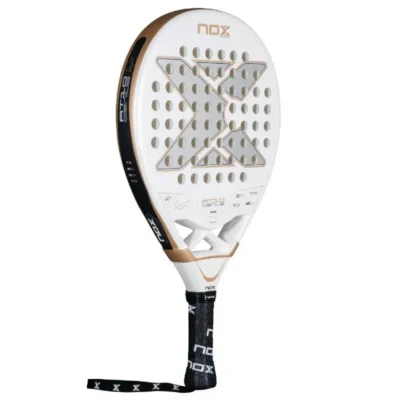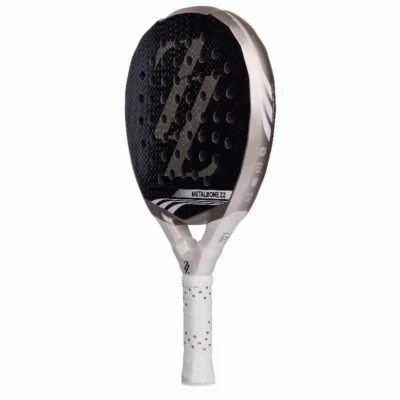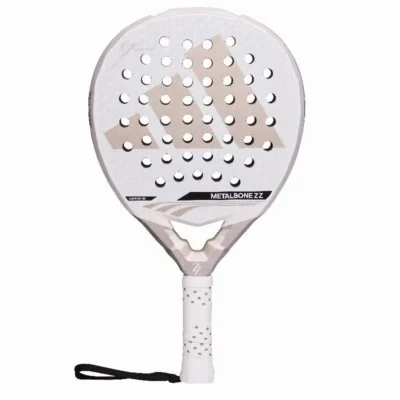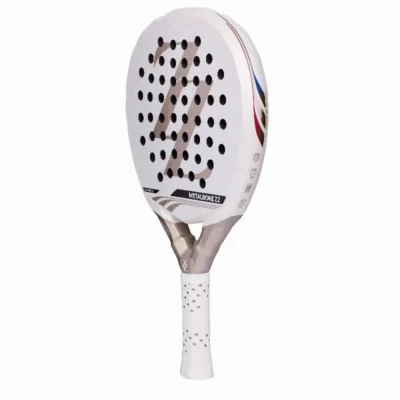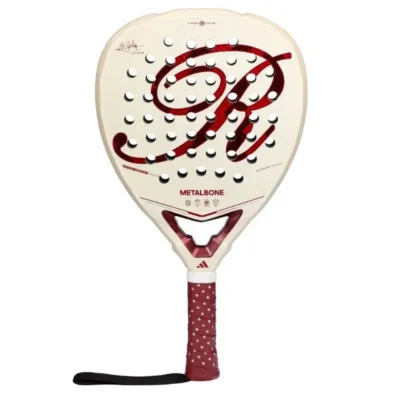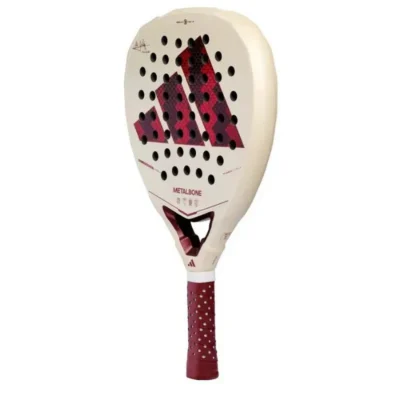
A racket can feel brilliant for the first 20 minutes, then expose its limits when the match gets quick, tight and physical. This Nox Equation Advanced review focuses on what matters when you are under pressure: control from the back of the court, comfort on off-centre shots, enough punch at the net, and whether this racket truly suits your game.
The Nox Equation Advanced sits in the all-round performance category. It is not built as a pure power weapon, and that is exactly why many improving and advanced players will find it appealing. It aims to give you a dependable response across defence, transition and attack without asking for perfect timing on every ball.
What type of racket is the Nox Equation Advanced?
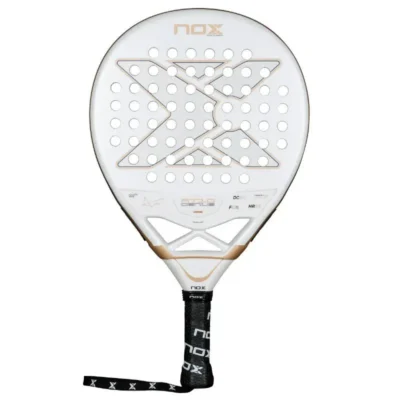
The Equation Advanced is generally recognised by its teardrop or hybrid-style shape, medium balance and generous sweet spot. That combination places it between a round control racket and a diamond-shaped power racket. You get quicker handling and more forgiveness than a head-heavy attacking model, while still having more attacking potential than a very soft, low-balance round racket.
For players who build points rather than trying to finish every ball with one huge smash, this is a sensible profile. It rewards placement, changes of pace and controlled volleys. It also gives you enough stability to play aggressively when the right ball arrives.
Nox has released Equation Advanced rackets in different versions and materials over the years. Details such as face composition, surface finish and feel can change by season, so always check the specifications of the exact model before buying. The core character remains similar: balanced, comfortable and designed for versatile players.
Nox Equation Advanced review: feel on court
The strongest part of the Equation Advanced experience is its easy, predictable handling. The medium balance keeps the racket manoeuvrable in fast exchanges, particularly when defending hard volleys or reacting at the net. You do not feel as though the racket head is dragging behind your hand.
That matters in padel because many points are decided by the next shot, not the spectacular one. When an opponent speeds up the ball at your feet, a racket that turns quickly and offers a useful sweet spot can save the point. The Equation Advanced is more accommodating in these moments than many stiffer, high-balance power rackets.
Its touch is usually on the medium-to-soft side compared with top-level carbon power models. That can make defensive lobs, chiquitas and controlled bandejas easier to judge. The ball tends to spend a fraction longer on the face, giving players a clearer sense of where they are sending it.
The trade-off is straightforward. Players who like a very hard, crisp impact may find the response slightly too muted. If you generate plenty of racket-head speed and want maximum ball penetration from every overhead, a more aggressive Nox model could be the better match.
Control from the back of the court
The Equation Advanced performs particularly well for players who spend time constructing points from the back glass. Its shape and balance help you prepare early, which is useful when returning deep balls, playing defensive blocks and lifting the ball over opponents at the net.
The wider sweet spot is a real advantage here. Nobody hits the centre every time, especially when defending after the ball has come off the glass. A forgiving face reduces the punishment on slightly late or off-centre contact. You still need clean technique, but the racket does not make every imperfect shot feel like a mistake.
It is also a good option for players moving up from an entry-level racket. A beginner may find it more demanding than a very soft round model, but an improving player will appreciate the added stability and more precise response as their technique develops.
Volleys, bandejas and net play
At the net, the Equation Advanced feels fast enough for active volleying. The medium balance makes it easier to keep the racket in front of your body and change direction late. This is useful when you want to play a firm volley to the fence one moment and a softer angled ball the next.
On bandejas and viboras, the racket favours control over brute force. You can work the ball into the corners with confidence and keep pressure on opponents without overhitting. Players with a compact overhead technique will get the most from it.
The surface texture available on some versions can add useful grip for spin, particularly on sliced volleys and overheads. Texture helps, but it is not magic. Spin still comes from your swing path, contact point and ability to relax through the shot.
How much power does it offer?
There is enough power for match play, but it is delivered in a controlled way. A well-timed volley, vibora or flat smash will travel with purpose. However, the Equation Advanced does not give away easy power in the way a diamond-shaped, high-balance racket can.
This can be a benefit for the right player. If your attacking shots often fly long, or if you want to stay accurate when accelerating through the ball, its more measured output helps. You can swing with confidence without feeling that every hard contact will launch too high.
If your priority is bringing the ball back over the net from a flat smash or finishing points with maximum speed, look towards a dedicated power racket. The Equation Advanced is for all-court players first, not players who judge a racket solely by smash performance.
Who should buy the Nox Equation Advanced?
This racket is best suited to intermediate and advanced players with a balanced game. It makes particular sense if you value comfort, control and handling, but do not want to give up the ability to attack at the net.
It is a strong choice for the player who likes to defend patiently, take the net with a well-placed lob, then use volleys and overheads to create the opening. It also suits players who are improving their technique and want a racket they can grow with rather than replace immediately.
Consider another option if you are a complete beginner who needs the softest and most forgiving possible racket. Equally, skip it if you are an experienced, aggressive player who prefers a hard face, top-heavy balance and explosive overhead power. There is no universally best racket – the right choice depends on how you win points.
Comfort and durability considerations
Comfort is one of the reasons players look at the Equation range. Its balanced construction and less extreme balance can feel kinder through long sessions than a stiff, head-heavy racket. For players who occasionally feel fatigue in the arm or elbow, that can be a meaningful advantage.
That said, no racket can solve an injury caused by poor technique, excessive grip pressure or playing too often without recovery. If you have persistent arm pain, review your grip size, overgrip, stroke mechanics and workload as well as your racket choice.
As with any padel racket, protect the frame from court contact and avoid leaving it in extreme heat or cold. Premium materials perform best when treated properly. A frame protector can help against light knocks, though a heavy protector may make the racket feel slightly more head-heavy.
Is it worth the money?
The Nox Equation Advanced is worth considering when you want one racket to cover most match situations well. Its value is not about being the most powerful or the most specialised option. It is about giving a broad range of players a confident, manageable performance without forcing them into a demanding pro-level profile.
Before choosing, be honest about your current level rather than the player you hope to become next month. If control, comfort and reliable handling would improve more points in your game than extra smash power, the Equation Advanced is likely to feel like money well spent. At 7padel, choosing by your playing style first is the simplest way to shop smart and play better.